
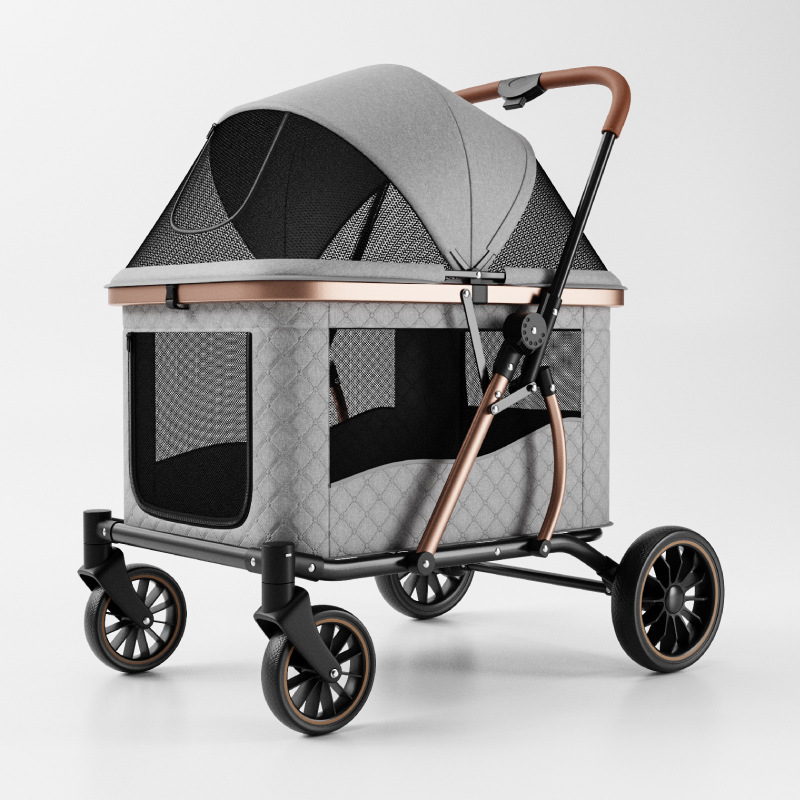
It rarely begins with one dramatic moment. The usual walk simply gets shorter. A large dog pauses at a corner that used to mean the route was just beginning. The dog looks back toward home, stands longer before a curb, or settles down while the rest of the family is still ready to keep going. The desire to be outside is still there. The distance is what has changed.
The first signs are easy to explain away.
A slower pace can look harmless at first. The dog stops more often, chooses the shade, hesitates before getting back into the car, or needs a longer rest after a route that used to feel ordinary. None of these observations explains the cause, and a veterinarian should guide medical questions. But they do tell the owner something important about daily life: the old distance may no longer match the dog in front of them.
Wanting to go and being able to walk the whole way are different.
Many large and senior dogs still become alert when the leash appears. They still want the familiar smells, the open car door, and the chance to be beside their people. The painful part for the family is that enthusiasm can last longer than comfortable walking. An owner may see a dog start eagerly and then struggle with the return distance. The outing becomes a calculation: if we go this far, can the dog get home comfortably?
The family starts shrinking the day without noticing.
The park loop becomes a quick trip outside. Weekend plans are chosen by walking distance. One person stays home with the dog while everyone else goes. Sometimes the dog is left behind because the family is afraid of being stranded too far from the car. These decisions are sensible, but repeated often enough they change the dog’s place in family life. The loss is not only exercise. It is the car ride, the park air, the people watching, and the quiet time beside everyone at the end of the outing.
Rest does not have to mean going home.
The missing option is often a dependable place to pause. A dog can walk the comfortable part of a route, rest for the longer stretch, and step back into the day when ready. This is why owners begin looking for a dog stroller for large dogs or a big dog stroller for senior dogs. They are not necessarily trying to replace walking. They are trying to stop every rest break from becoming the end of the family plan. For another view of this routine, read Rest Breaks That Still Feel Like the Outing.
The useful question is not whether a breed fits.
Searches such as “Golden Retriever stroller” or “large dog stroller for a Labrador” make sense because owners need a quick starting point. But two dogs of the same breed can rest very differently. One curls tightly; another lies long. One steps into new spaces calmly; another needs more room and time. Current body measurements and resting posture matter more than the breed label. The large dog stroller Fit Guide explains what to measure, and the Golden Retriever fit guide shows why breed alone cannot confirm the answer.
The routine around the dog matters too.
A resting option is only helpful if the family can use it repeatedly. The owner has to think about the front door, the usual path, the person handling the dog, and the vehicle used on weekends. For many families, the question “will a large dog stroller fit in an SUV trunk?” is as important as the dog’s measurements. Measure the narrowest cargo opening and the usable floor space rather than relying on the vehicle model alone. The SUV trunk fit guide walks through that check.
A mobility aid should not ask the dog to prove anything.
A stroller is not a cure, a rehabilitation claim, or a replacement for professional advice. It is a practical way to carry a dog for rest and transport. The dog does not have to reach complete exhaustion before using it. The owner does not have to wait until every walk has disappeared. The kindest routine is often the one that makes space for a good stretch of walking and an equally normal stretch of resting.
The goal is not more distance. It is more belonging.
A slower dog may need a different version of the day, but still wants the same people, places, and small rituals. The most useful change is not forcing the old routine to continue unchanged. It is building a new routine in which the dog can walk, pause, watch, rest, and remain part of what the family is doing. Distance becomes flexible. Belonging does not.