

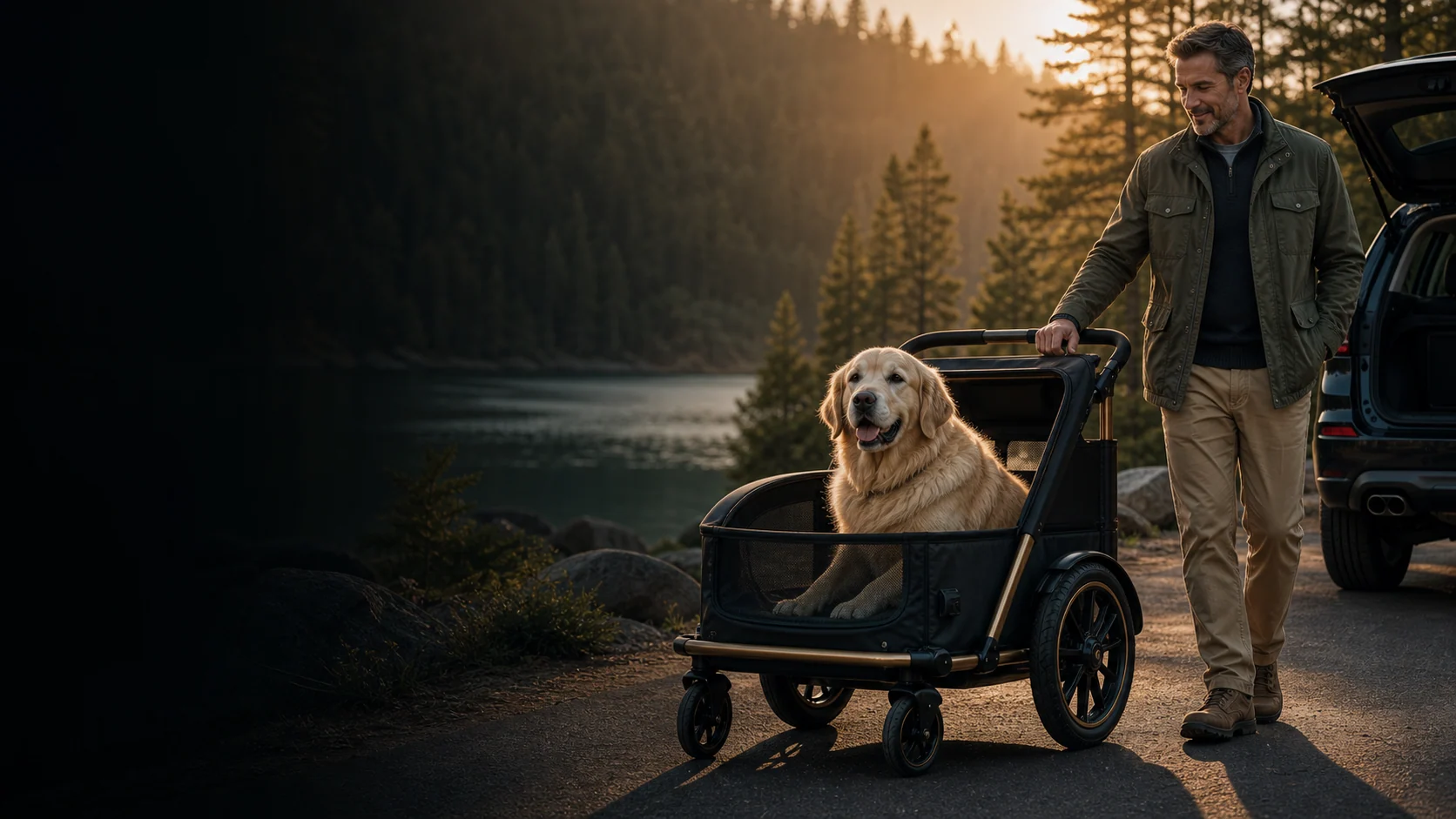
Many owners do not notice the change as one dramatic moment. The dog still wants the leash. The family still wants the park. What changes is the confidence that everyone can finish the route calmly.
Plan the return before leaving.
For senior and large dogs, the hardest part of a walk is often the last third. Choose a route where the dog can enjoy the first stretch, then rest before the family turns back.
Watch for small changes, not only big ones.
Slower starts, more sniffing breaks, hesitant turns, or lying down after the outing can be useful signals. If those changes are new or painful, a veterinarian should help rule out medical causes.
Keep the outing emotionally normal.
The point is not to make the dog feel managed. The point is to preserve the familiar cues: the door, the path, the people, the smells, and the shared return home.
Share this article