

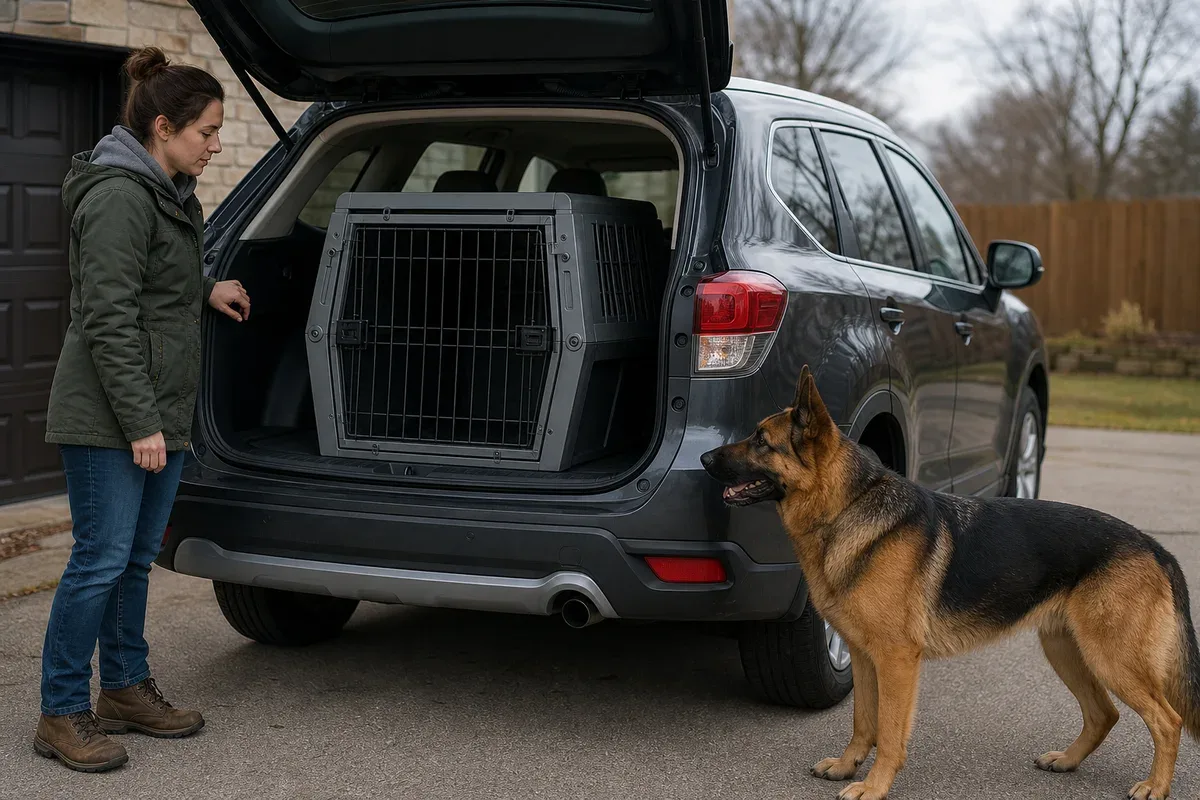
Dog car crate vs harness is not a contest with one universal winner. Both words describe broad product categories, and a safe travel plan depends on the specific restraint, the dog’s size and comfort, the vehicle’s usable space, the manufacturer’s installation method, and independent performance evidence. A loose wire crate and a properly secured travel crate are not equivalent. An everyday walking harness and a vehicle restraint harness designed and tested for car use are not equivalent either.
For a large dog, the decision becomes especially practical. A crate that fits the dog may not fit through the cargo opening. A harness may fit the dog but place the body poorly against a seat or attachment path. The useful comparison starts with real measurements and verified instructions, then adds calm practice in a parked vehicle. This guide cannot certify a product or predict crash outcomes, but it can help families ask better questions before travel.
Start the dog car crate vs harness decision with three measurements
Measure the dog, the vehicle, and the proposed restraint system. For the dog, record standing height, body length, chest girth, and weight using the product maker’s current sizing method. For the vehicle, measure the door or hatch opening as well as the usable interior space. A crate can fit on paper and still fail at the narrowest point of entry. Seat contours, folded-seat gaps, cargo tie-down locations, airbags, and the path of the seat belt can also change what is workable.
Then measure access. Can the dog step or be assisted into the chosen location without twisting, slipping, or jumping from an uncomfortable height? Can an adult reach every buckle, latch, and anchor without climbing across the dog? The Steadavo Fit Guide can help organize current dog and vehicle measurements before comparing mobility and travel equipment.
Do not buy from a photograph of a similar breed. Two dogs with the same weight can have different chest shape, torso length, and resting posture. Likewise, two SUVs can have very different cargo openings and anchor structures. Write the measurements down and compare them with the exact product instructions, not a reseller’s generic size label.
Understand the dog car crate vs harness systems
A travel crate is an enclosure. Its performance depends on the shell, door, latches, connectors, anchor straps, vehicle attachment points, orientation, and installation working together. The Center for Pet Safety crate and carrier FAQ explains that its crate testing looks at structural integrity, door and latch performance, containment, and the connections specified by the manufacturer. That is a system-level evaluation, not a statement that any rigid or wire crate is automatically protective.
A vehicle restraint harness places tested webbing and hardware on the dog’s body and connects to the vehicle using a specified method. An ordinary walking harness is designed for leash handling, not necessarily crash protection. Labels such as “car safe,” “tested,” or “heavy duty” are starting points for investigation, not proof by themselves. Look for a named test standard or protocol, the sizes and weights evaluated, the exact configuration used, and a result that can be checked outside the seller’s own page.
In a dog car crate vs harness comparison, include the complete installed setup. A strong crate without the required anchor straps is incomplete. A tested harness connected with an unapproved extension tether is also a different system from the one evaluated. Follow the current manufacturer’s instructions exactly, including position, routing, replacement, and compatibility limits.
Dog car crate vs harness: when a secured crate may fit
A crate can create a consistent contained space and may reduce a dog’s ability to move around the vehicle. It can also keep muddy paws, gear, and resting space organized during a road trip. For a crate to be a serious option, it must fit the dog as the maker specifies, pass through the vehicle opening, sit in the permitted orientation, and connect to suitable vehicle anchors with the required hardware.
Large-dog crates demand honest space planning. Check whether the hatch can close without pressing the crate, whether ventilation openings remain clear, and whether luggage can be secured separately rather than stacked against the enclosure. Confirm that the vehicle’s anchor points and load limits are appropriate for the manufacturer’s installation. Do not improvise with bungee cords, loose rope, or handles that were not designed as crash attachment points.
Independent testing shows why the details matter. In a 2011 preliminary crate test, the Center for Pet Safety tested an untethered generic wire crate with a 55-pound crash-test dog and reported severe failure. That single preliminary test does not rate every wire crate or every installation, but it does undermine the shortcut that “inside a crate” always means “secured.” Containment, structure, and vehicle attachment must be evaluated together.
Dog car crate vs harness: when a vehicle harness may fit
A harness can use less cargo volume and may work when a large crate cannot pass through the vehicle opening. It may also allow the dog to ride on a rear bench while the cargo area holds securely stowed equipment. The choice still requires a product specifically intended for vehicle restraint, an appropriate tested size, correct body fit, and the exact attachment method used in the supporting evidence.
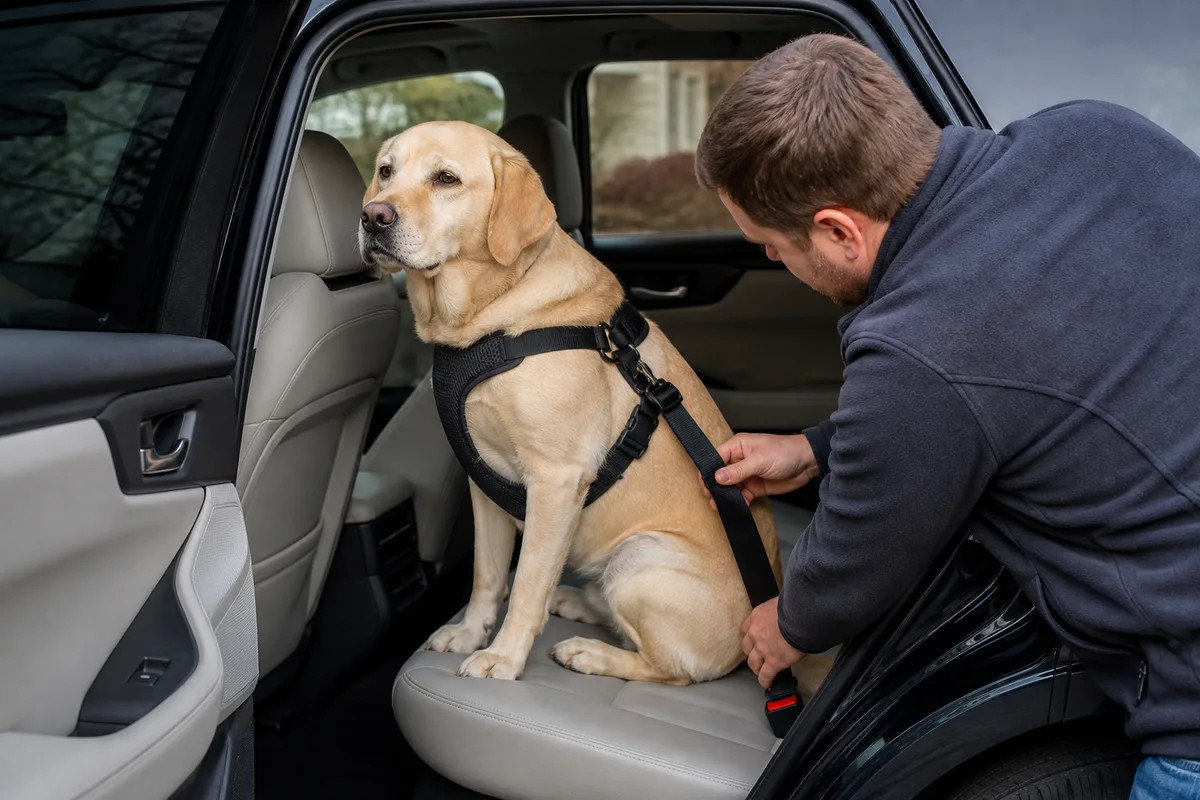
Check the harness on the stationary dog before entering the vehicle. Webbing should lie as the manufacturer shows, hardware should close fully, and the dog should be able to maintain the permitted seated or lying position without twisting. Recheck after the dog changes posture. If the instructions call for a direct seat-belt path, adding a long tether may increase movement and depart from the tested setup.
The Center for Pet Safety’s harness selection guidance stresses acclimation and warns that broad crash-protection claims may not be substantiated. It recommends short practice trips that increase gradually. Product fit and calm use matter because a dog fighting the equipment can distract the driver even before crash performance becomes relevant.
Compare access, comfort, and vehicle use without inventing certainty
Make a two-column worksheet for the exact crate and exact harness being considered. Under each option, record tested weight range, evidence source, required attachment, dog fit, vehicle fit, entry method, setup time, cleaning, and replacement guidance. Add a final line for what happens when the dog is tired, wet, sore, or reluctant to enter. A system that works only when everyone is fresh may not support the return trip.
Consider passengers and cargo. A rear-seat harness uses seating space and must remain clear of incompatible airbags or objects. A cargo-area crate uses volume and needs separation from unsecured luggage. Neither system should become a shelf for heavy gear. The driver should never need to reach back to adjust the dog while moving.
The National Highway Traffic Safety Administration’s distraction guidance recommends securing pets in a carrier or portable kennel before the vehicle moves. More broadly, anything that pulls a driver’s eyes, hands, or attention from driving is a distraction. Complete fit checks, water breaks, and restraint adjustments only while safely parked.
Read crash-test language carefully
“Crash tested” can mean that a company conducted some form of test; it does not by itself tell you the protocol, pass criteria, product configuration, size, or outcome. Ask five questions: Who performed the test? What published standard or protocol was used? Which exact size and setup were evaluated? What counted as passing? Is the current product materially the same as the tested version?
The Center for Pet Safety publishes test results and a list of currently certified products, but even certification has a defined scope. A listed size, attachment method, or accessory should not be casually extended to another configuration. Large and giant dogs deserve particular caution because not every product line or weight range has equivalent public evidence. If the dog falls outside the tested range, contact the manufacturer and independent testing organization for current documentation rather than assuming the next size works the same way.
Do not confuse distraction control with crash protection. A barrier may keep a dog out of the front seat without restraining the body in a collision. A walking harness may limit roaming but lack crash-performance evidence. A crate may contain a dog during ordinary driving yet fail if it is not anchored or structurally suitable. Name the job each component performs.
Practice the complete setup before a real trip
Introduce either system away from travel pressure. Let the dog investigate the crate or wear the harness for short, positive sessions. Practice the vehicle entry with the engine off. Close doors or the hatch only after the dog is calm, and remain nearby. Then rehearse the complete attachment and release sequence until an adult can perform it without guessing.
The American Veterinary Medical Association’s traveling-with-pets guidance advises acclimating a dog to a crate or seat-belt harness and states that dogs should not ride on the driver’s lap or in a front passenger seat with an airbag. It also recommends short positive steps when introducing a harness. If the dog shows marked fear, motion sickness, pain, or a sudden behavior change, pause the training and speak with a veterinarian for individual guidance.
Begin with a very short drive, then inspect the setup while parked. Look for shifted straps, loosened anchors, rubbed fur, bent hardware, crate movement, or a dog posture that the instructions do not permit. Stop using damaged equipment. Follow the manufacturer’s guidance about replacement after a collision, even if damage is not obvious.
Make the dog car crate vs harness choice deliberately
A responsible decision may be a tested secured crate, a tested vehicle restraint harness, or a conclusion that the current vehicle cannot safely support the desired setup. Product availability, dog size, and vehicle geometry create real limits. There is no value in forcing a popular option into a space where it cannot be installed as designed.
Review current Atlas and vehicle-access considerations on the Atlas product page, then continue with the SUV trunk fit guide for a production article about measuring the cargo opening and usable space. Those pages support planning; they do not replace the restraint maker’s installation instructions or independent test evidence.
The best dog car crate vs harness plan is specific enough to verify: one dog, one vehicle, one product, one documented attachment method, and a practiced routine. Measure first, read the evidence, install exactly, and make every adjustment while parked.
Sources and further reading
- Center for Pet Safety: Test Results
- Center for Pet Safety: Crate and Carrier FAQs
- National Highway Traffic Safety Administration: Distractions In and Out of the Vehicle
- American Veterinary Medical Association: Traveling With Your Pet
Frequently asked questions
Is any crate safer than any dog car harness?
No. Safety claims depend on the exact product, tested size, installation, attachment method, and vehicle. A loose generic crate and a properly secured tested crate are not equivalent.
Can I use my dog’s walking harness as a car restraint?
Do not assume so. Use only a harness specifically intended for vehicle restraint, within its documented size range, and installed exactly as the manufacturer and supporting test evidence specify.
What should I measure before buying a large-dog travel crate?
Measure the dog, the hatch or door opening, usable interior space, and the proposed anchor layout. Confirm ventilation, hatch clearance, entry method, and the maker’s required orientation.
How should I introduce a dog to a new car restraint?
Use short positive sessions outside the vehicle, then practice in a parked vehicle with the engine off. Increase trip length gradually only after the dog is calm and the setup remains correct.