

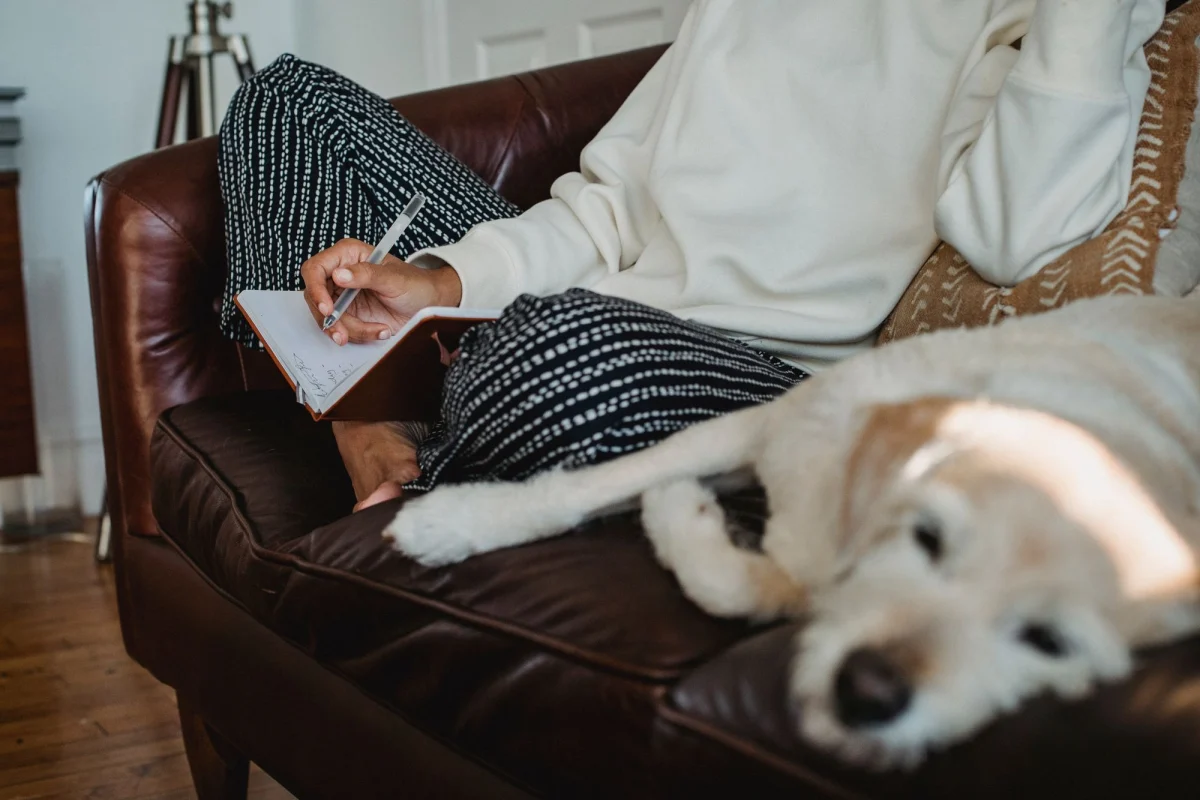
A dog home routine planner gives a household one shared picture of the dog’s day. It coordinates meals, water, toileting, walks, rest, enrichment, training, medication or preventive tasks confirmed by a veterinarian, and the small observations that otherwise remain in one person’s memory. The goal is not to control every minute. It is to make important care predictable while leaving room for the individual dog to choose, pause, and adapt.
Predictability can help a dog understand what usually happens next, but a schedule should never override sleep, pain, fear, heat, illness, or a change in ability. A puppy, an adolescent, an active adult, a large dog, and a gray-muzzled senior may share a home yet need different timing and intensity. Build the plan from the dog in front of you rather than copying an idealized routine from social media.
A dog home routine planner starts with observation
For three ordinary days, record what already happens without trying to improve it. Note the first rise, toileting trips, meals, water refills, walks, sniffing, play, training, independent rest, family activity, and bedtime. Record approximate windows rather than exact minutes. “Morning walk between 7:00 and 7:45” is often more realistic than a promise that every day begins at 7:12.
Beside each activity, write what the dog did before and after. Did the dog wake naturally, ask to go out, approach the leash, avoid a slippery doorway, settle after the walk, or remain restless? This turns the plan into a functional record. It also exposes hidden conflicts, such as an exciting game immediately before the household expects quiet work.
Use the Pet Lifestyle Field Notes archive for focused routines that support this planner: rainy-day enrichment, calm mornings, visitor greetings, home-office days, multi-dog rest zones, backyard rest, toy rotation, sleep spaces, and settling after a move.
Choose anchors instead of filling every hour
An anchor is a dependable part of the day: first outdoor access, breakfast, a midday check, an evening activity, or bedtime. Place essential care around four to six anchors, then leave open space between them. Dogs need uninterrupted rest, and owners need a plan that survives meetings, school runs, weather, and travel.
Define each anchor by outcome. A morning anchor might include outdoor access, fresh water, a meal under the dog’s veterinary nutrition plan, and a calm transition to rest. It does not require the same walking distance in every season. When heat, ice, smoke, pain, or fatigue changes the safe option, a shorter outing and ability-matched indoor sniffing can serve the day better than preserving a number on a calendar.
A dog home routine planner should show both the normal version and the lower-demand version of each anchor. That makes adaptation a planned response rather than a failure.
Build a dog home routine planner around rest
Rest is not the leftover space after activity. Mark quiet blocks in which the dog has a comfortable, accessible place away from repeated handling and household traffic. Ask family members not to wake or crowd the dog. Children need active adult supervision and a simple rule: a dog who is sleeping, eating, chewing, or moving away is given space.
Watch whether the rest location is actually usable. A senior dog may stop choosing an upstairs bed. A large dog may need more turning space than a decorative bed provides. A dog who avoids a room may be responding to heat, sound, slippery footing, social pressure, or discomfort. Record the pattern and discuss meaningful change with the veterinarian instead of declaring the dog stubborn.

Plan enrichment by response, not novelty
Ohio State’s environmental-enrichment guidance describes food, sensory, object, social, and training opportunities, but enrichment only works when the individual participates without fear. Choose one short opportunity, observe the response, and stop while the dog is comfortable. More complicated is not automatically better.
Rotate among sniffing, simple food-search activities approved for the dog’s diet, quiet exploration of a safe surface, positive training, social time, and independent rest. Avoid filling every pause with a toy. For a senior dog, Cornell recommends adapting enrichment to current physical and cognitive ability, using secure footing and frequent reassessment.
Write the purpose and the stop signal in the planner. “Five-minute scatter search on the rug; stop if bending or turning becomes difficult” is safer and more informative than “mental stimulation.” Avoid repeated high-speed jumping, tight turns, or hard stops merely because the dog remains excited.
Use a dog home routine planner for clear handoffs
Assign one owner to each essential task and one backup. The handoff should show what was completed, not simply who was supposed to do it. A check beside “evening medication” must mean the labeled dose was given under current veterinary instructions; it cannot mean someone intended to give it later. Keep medications in original packaging and never change timing or amount from the planner alone.
For walks, record the route option, equipment, weather adjustment, and any observation the next person needs. For meals, record the confirmed food and amount, not a family member’s guess. For water, assign cleaning and refill checks without restricting access unless a veterinarian has provided specific instructions.
The related Park Days After Short Walks article shows how a lower-distance outing can still preserve fresh air, observation, and shared time. Link that option to the day’s movement anchor instead of treating it as an unrelated special event.
Keep training short, positive, and connected
Add training to moments that already occur: waiting while a door opens, settling before a meal is placed, stepping onto a mat, or checking in during a walk. Use reward-based methods and brief repetitions. The AAHA behavior guidelines support positive reinforcement, enrichment, and ongoing behavioral assessment rather than punishment-based shortcuts.
Do not use the routine to force exposure to a trigger. Cornell guidance for reactive behavior emphasizes identifying triggers, maintaining a distance the dog can handle, and building new associations with appropriate professional help. If a visitor, elevator, dog, sound, or handling task repeatedly produces fear or escalation, revise the environment and seek qualified guidance.
Adapt the dog home routine planner across life stages
A puppy plan needs frequent outdoor access, safe socialization, sleep, and short positive learning. An adolescent may need clearer environmental management and consistent rules. An adult routine can balance exercise, enrichment, social time, and rest. A senior routine may shift activity into shorter, more frequent windows and reduce unnecessary stairs or slippery routes.
Change one variable at a time when possible. If a dog suddenly stops joining an activity, do not immediately replace it with more stimulation. Check the surface, weather, timing, social setting, and signs of discomfort. Sudden behavior change can have a health component and belongs in a veterinary conversation.
Review the dog home routine planner after illness, a medication change, a move, a new family member, a new work schedule, boarding, or travel. Mark the new baseline and archive the old plan so the change remains understandable.
Create calm morning and evening versions
Morning should begin with safe outdoor access and observation before the house becomes rushed. Prepare leash and equipment the night before, clear the route, and give a large or senior dog enough time to rise. Avoid turning every departure into high excitement. A predictable cue, practical outing, water and meal routine, and protected rest window can reduce confusion.
The evening routine should lower intensity gradually. Finish vigorous activity with enough time for breathing and arousal to settle, provide outdoor access, refresh water, check the sleep route, and place gates or lighting consistently. Keep last-minute grooming or handling off the bedtime list when the dog is tired or less tolerant.
Review a dog home routine planner every week
A five-minute weekly review asks: Were essential tasks completed? Did the dog choose and recover from activities comfortably? Was rest protected? Did family handoffs work? Did weather or schedule repeatedly force a different plan? Is any change persistent enough to discuss with the veterinary team?
Remove activities that exist only because they look productive. Keep the few anchors that protect care and connection. Update names, backup contacts, food or medication instructions confirmed by professionals, and the lower-demand options. A plan that cannot bend will eventually be ignored.
Keep one printed copy where every responsible caregiver can find it.
Use the Field Notes library to connect each routine with the relevant dog-only guide. The planner keeps enrichment, visitor, sleep-space, and moving routines within the same household rhythm, while each focused guide addresses one practical problem.
Build the home planner around meals, relief, rest, care, and the dog’s actual responses before adding more equipment to the day.
Wait until the household has tested a workable daily rhythm; then compare gear with your outing needs, using a simple outing routine that does not complicate home life as the filter.
Sources and professional context
- AAHA: Canine and Feline Behavior Management Guidelines
- Ohio State Indoor Pet Initiative: Environmental Enrichment
- Cornell: Anxious Behavior and Predictable Routines
- Cornell: Senior Dog Enrichment
Related guides for dog home routine planner
Choose the focused dog guide that matches your next step:
- Rainy Day Enrichment for Large Dogs at Home
- An Older Dog Morning Rhythm for a Calmer Home
- A Dog Visitor Greeting Routine for a Calmer Home
- A Practical Dog Home Office Routine
- How to Set Up Multi-Dog Household Rest Zones
- A Dog-Friendly Backyard Rest Zone Plan
- A Dog Toy Rotation System That Stays Manageable
- How to Set Up a Comfortable Dog Sleep Space
- A Dog Routine After Moving to a New Home
More focused Pet Lifestyle guides
More dog-only guides for the next practical decision:
- How to Create a Dog Quiet Zone During Home Renovation
- A Dog Routine Plan for Household Schedule Changes
- A Dog Sitter Handoff Guide for Daily Routines
- How to Build a Dog Evening Wind-Down Routine
- A Calm Dog Apartment Hallway Routine
- A Dog Routine for Overnight Houseguests
- A Dog Family Routine Before a New Baby Arrives
- Dog Cue Consistency Across Multiple Caregivers
- How to Set Up a Low-Stress Dog Mealtime Area
- A Dog Weekend Routine Reset for Monday
Frequently asked questions
How strict should a dog home routine be?
Use dependable care windows and flexible lower-demand options rather than a minute-by-minute timetable. Health, weather, age, sleep, and the dog’s response should be allowed to change the day.
What belongs in a family dog planner?
Include meals, water checks, outdoor access, walks, rest, enrichment, training, approved medications or preventives, observations, owners, backups, and the completion status of essential tasks.
When should a routine change be discussed with a veterinarian?
Discuss sudden or persistent changes in appetite, drinking, elimination, sleep, mobility, energy, tolerance, or behavior, especially when the dog appears painful, weak, distressed, or unlike the established baseline.