

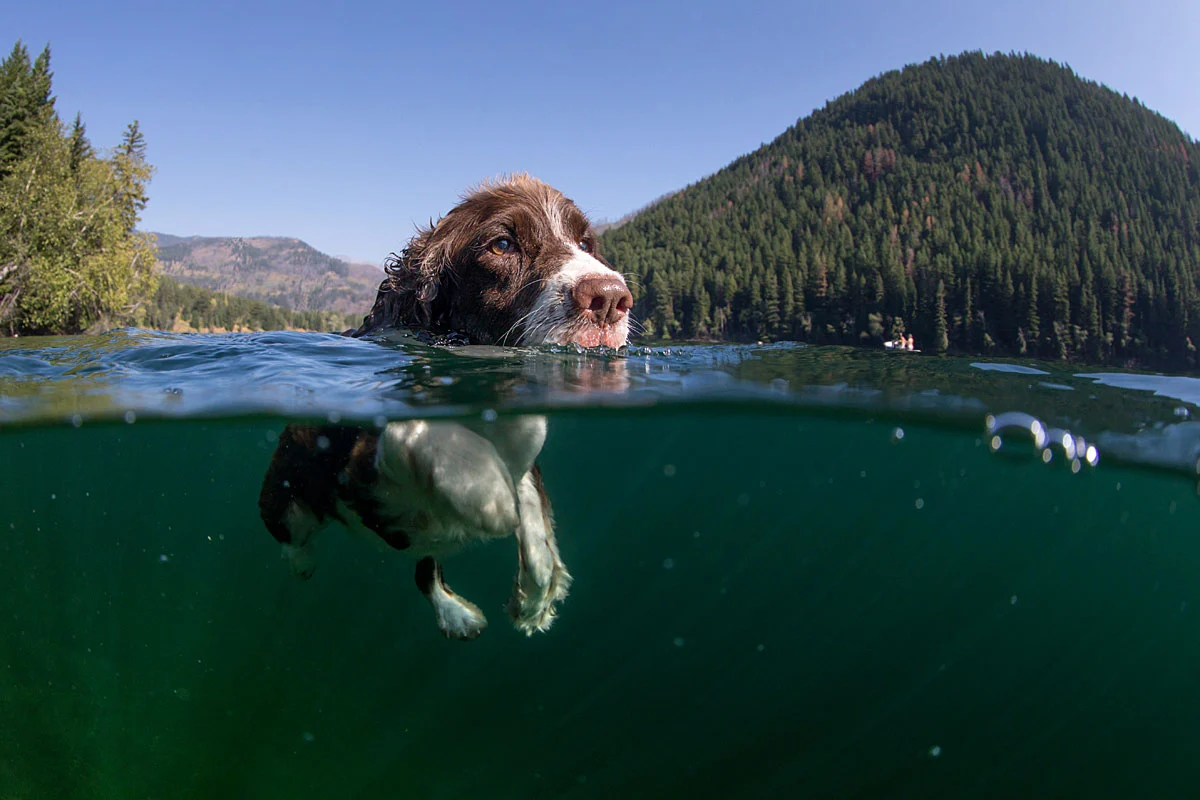
A lake can look peaceful and still be a poor place for a dog to drink or swim. A clear plan begins before the leash comes off: check the public advisory, scan the water and shoreline, bring drinking water, and decide how you will rinse your dog if the conditions change. This guide treats dog lake water safety as a practical pre-outing decision, not a promise that a photograph or a quick glance can prove water is safe.
Large and senior dogs also need a slower assessment. A steep bank, slippery launch, strong current, or long walk back to the car can turn a pleasant visit into a difficult recovery. If the site feels hard to exit, choose a shore walk and a short observation stop instead of forcing a swim. The goal is a calm return with the dog still comfortable, hydrated, and responsive.
What dog lake water safety means before launch
Dog lake water safety is the habit of checking several small signals together. Start with the lake authority, state or provincial environmental agency, or park page for current advisories. An old social post, a busy parking lot, or the fact that other people are swimming is not a water-quality test. Conditions can change after heat, rain, runoff, or a bloom, and a warning may cover only one part of a large lake.
Next, look at the approach. Can your dog walk to the edge without scrambling? Is there a stable, shallow entry and an easy way out? Is the shoreline crowded, full of fishing hooks, or scattered with dead fish? A dog that is excited to explore may pull hard and lose footing. Keep the first inspection on leash, and give yourself room to leave before you unpack towels or toys.

Read the surface without pretending it is a laboratory test
Water that looks green, blue-green, brown, or unusually cloudy deserves a pause. Scum, foam, mats, streaks that resemble spilled paint, a strong odor, or a sudden color change are reasons to keep your dog away. Harmful algal blooms are not always obvious, so a normal-looking surface is not proof of safety. Check the local notice again when you arrive, especially if the weather has changed since you planned the outing.
Do not let your dog investigate a dead fish, a pile of algae, or anything washed up along the shore. A curious dog may mouth a small object before you can see it. Keep the leash short enough for a calm redirection, and carry a clean-water bottle so you can rinse a muzzle or paw without using lake water.
Dog lake water safety starts with a clean-water plan
Pack drinking water from home and offer it before your dog becomes thirsty. Fresh water is a simple way to reduce the temptation to lap from a lake, puddle, or boat launch. Bring a bowl that stays stable on uneven ground, plus a second bottle reserved for rinsing. Label the bottles so a hurried hand does not confuse drinking water with water used to clean a muddy paw.
- Check the advisory and the forecast before leaving.
- Carry fresh drinking water, a bowl, a towel, and a rinse bottle.
- Use a leash for the first shoreline inspection and every exit.
- Choose a shallow, stable launch with a visible path back to land.
- Leave immediately when the water, shore, or dog’s behavior gives you doubt.
If you use a life jacket, fit it on dry land and practice the handle and release before the outing. A flotation aid can help with handling, but it does not make contaminated water safe, replace supervision, or guarantee that a tired dog can swim. Keep a large dog close enough to guide without leaning over an unstable bank.
Dog lake water safety means keeping algae and dead wildlife out
Harmful algal blooms can contain toxins that make pets very ill. The Centers for Disease Control and Prevention advises keeping animals away from water that looks or smells bad, preventing them from eating algae or dead animals, and rinsing immediately with clean tap water after possible contact. Do not let a dog groom lake water from the coat or paws. If the only rinse available is the lake, leave and find a clean source instead.
“When in doubt, keep out” is useful because visual judgment has limits. You do not need to identify the organism, name the color, or decide whether a smell is normal. Move away, take a photograph for the local authority if it is safe to do so, and record where and when you saw the condition. That information can help the next visitor without putting your dog closer to the water.
Decide whether swimming fits the dog and the place
Swimming is not a required part of a lake day. Consider your dog’s age, confidence, stamina, and ability to stand up on the approach. A nervous dog may do better watching from a dry, shaded spot. An older dog may enjoy a short shoreline sniff more than a deep-water entry. Never push a dog into water or assume that a breed, size, or previous swim predicts today’s response.
Watch the conditions around the water as well as the dog. Wind, waves, boat traffic, hidden drop-offs, and a current can make a familiar lake feel different. Keep a safe distance from anglers, wildlife, and other dogs. If thunder, heavy rain, or a fast-rising current develops, leave promptly; the walk back is easier before the shore becomes crowded or slick.
Rinse, dry, and observe after water contact
After a swim or an accidental splash, move to clean water and rinse the coat, paws, collar, and leash hardware. Use your hands to check for grit, hooks, or plant material without scrubbing irritated skin. Towel-dry the dog and offer fresh water. The rinse is a hygiene step, not a treatment that makes a suspected toxin harmless.
Call a veterinarian promptly if you suspect exposure to a harmful bloom, algae, a dead animal, or an unknown substance, or if your dog becomes unwell after the visit. Follow the professional’s instructions rather than trying household remedies. Signs such as repeated vomiting, weakness, confusion, tremors, breathing changes, or collapse are not a wait-and-see situation. This article is general education, not a diagnosis; speak with a veterinarian about your dog’s specific risk.
Build a calm shore routine for a large dog
Use the same sequence each time: pause at the car, offer fresh water, clip the leash, read the notice, scan the shore, and choose the shortest safe route to the water. Keep the first visit brief so you can learn how your dog handles the texture, smells, and noise. A calm exit is part of the plan, not an admission that the day failed.
For a dog with limited mobility, place the towel and water where you can reach them without leaving the dog unattended. Ask a second adult to manage the leash if the bank is uneven. You can also make the outing meaningful without swimming: sit under shade, watch birds from a distance, practice a quiet “leave it,” and return home before fatigue changes the dog’s choices. Fit Guide can help you prepare practical handling questions before a longer adventure.
A dog lake water safety checklist to save
- Verify the current local advisory, not only a map or review.
- Look for scum, foam, mats, odd color, odor, dead fish, hooks, and unstable footing.
- Bring separate fresh water for drinking and rinsing.
- Keep the dog leashed until the entry, exit, and surrounding traffic make sense.
- Supervise every swim and keep the distance short enough to guide calmly.
- Leave at the first doubt about water, weather, shore, or your dog’s condition.
- Rinse with clean water, dry, and monitor after contact.
- Call a veterinarian if exposure or symptoms concern you.
For more route ideas, browse Outdoor Adventure Field Notes or the practical park-day Field Note. These links are a starting point; the lake authority’s current notice remains the source for local conditions.
FAQ
Can a dog swim if the lake looks clear?
Clear water is not a guarantee. Check the current local advisory, inspect the shore, bring fresh drinking water, and leave if anything looks or smells unusual.
What if my dog drank a little lake water?
Move the dog away from the water, offer clean drinking water, and monitor closely. If the water was questionable or your dog shows any concerning sign, contact a veterinarian promptly.
Do dogs need a life jacket in a lake?
A flotation aid can support handling in some settings, but it does not replace supervision, make contaminated water safe, or guarantee swimming ability. Fit and practice it before the outing.
How soon should I rinse a dog after possible algae contact?
Rinse immediately with clean tap water, prevent licking during the rinse, and call a veterinarian for professional guidance if exposure is suspected.
Sources and reading
- CDC: Preventing Pet and Livestock Illnesses Caused by Harmful Algal Blooms
- CDC: How to Recognize a Harmful Algal Bloom
- NOAA Ocean Service: Impacts of Harmful Algal Blooms
- Cornell University College of Veterinary Medicine: Blue-Green Algae Poisoning
Frequently asked questions
Can a dog swim if the lake looks clear?
Clear water is not proof of safety. Check current advisories, inspect the shore, bring fresh water, and leave if anything looks or smells unusual.
What if my dog drank a little lake water?
Move away from the water, offer clean drinking water, and contact a veterinarian promptly if the water was questionable or your dog shows concerning signs.
Do dogs need a life jacket in a lake?
A flotation aid can support handling in some settings, but it does not replace supervision or make contaminated water safe. Fit and practice it before the outing.
How soon should I rinse a dog after possible algae contact?
Rinse immediately with clean tap water, prevent licking during the rinse, and call a veterinarian for professional guidance if exposure is suspected.