

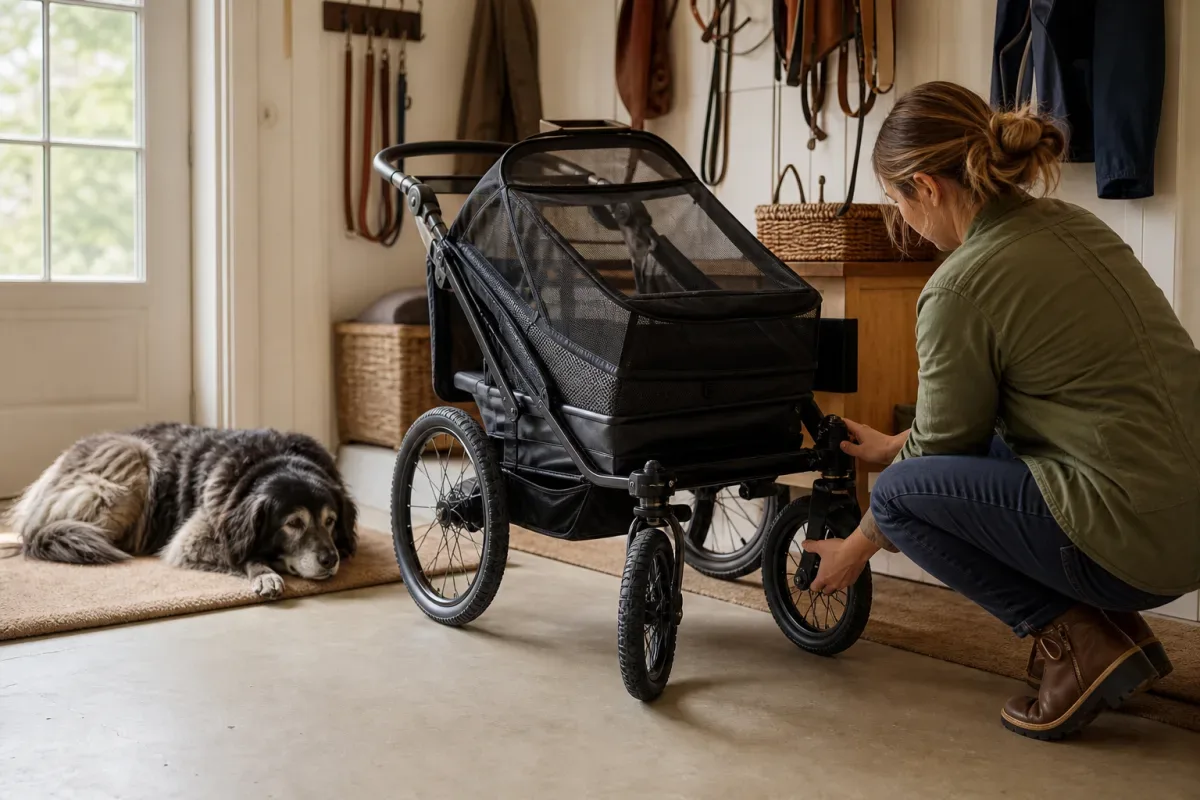
Dog mobility gear maintenance is a repeatable decision about whether equipment is clean, complete, correctly assembled, suitable for the dog and route, and ready for service today. The schedule may include a stroller, ramp, lift-assist harness, ordinary walking harness, leash, vehicle crate or restraint, travel bowl, bed support, non-slip surface, and the storage systems that keep those items usable.
A maintenance log cannot certify safety, extend a product beyond its intended life, or turn an unsuitable product into medical equipment. Follow the specific manufacturer instructions, serial or model information, weight and use limits, warnings, replacement parts, and service contacts. When the dog’s movement, body, tolerance, or veterinary plan changes, reassess fit and purpose before repeating yesterday’s routine.
Dog mobility gear maintenance starts with an inventory
Give each item a record: product name, category, manufacturer, model, serial or lot number when present, purchase date, seller, receipt, manual, warranty, dog assignment, stated limits, replacement parts, support contact, and storage location. Photograph labels and the intact product from several angles.
Do not group several different harnesses as “dog gear.” A buckle, webbing path, cleaning method, and fitting instruction may be unique to one model. Record accessories and adapters separately so a missing pin, tether, axle cap, tray, safety strap, or cover cannot be mistaken for an optional part.
A maintenance schedule is most useful when it follows the actual product, current instructions, frequency of use, and recorded observations.
If Atlas is part of your comparison, review current Atlas product information and decide which maintenance questions belong on your checklist.
Create three maintenance intervals
Use pre-use, cleaning-cycle, and periodic intervals. A pre-use check is short enough to complete every outing. A cleaning-cycle check occurs whenever mud, salt, sand, hair, water, food, urine, or another contaminant is removed. A periodic check is a slower inspection at the manufacturer’s interval or a conservative household interval when the manual does not define one.
Add event-driven checks after transport, impact, a fall, airline or cargo handling, unusual noise, brake change, difficult folding, water exposure, a long stored period, extreme weather, or a dog fit change. Time alone does not capture use severity.
A dog mobility gear maintenance calendar should never overwrite the manual. Where the manufacturer gives a stricter inspection, service, lubrication, cleaning, or replacement interval, use that instruction.
Build a dog mobility gear maintenance pre-use loop
Start with identity: correct product, correct dog, all required parts, no active recall or stop-use notice known, and the planned route within stated use limits. Then inspect from ground contact upward. Look for wear, cracks, bending, corrosion, loose parts, missing fasteners, frayed stitching, damaged webbing, degraded grip, sharp edges, contamination, or movement that differs from baseline.
Operate every user control without the dog: folds, locks, brakes, latches, buckles, zippers, gates, restraint attachments, height adjustments, and release mechanisms. The control must engage as described and remain engaged during the manufacturer’s check. Never improvise a safety test that loads the product outside its instructions.
Finish with fit and dog response. Confirm current measurements, contact areas, clearance, secure footing, ventilation, restraint routing, and voluntary comfort. Stop when the dog resists, appears painful, slips, pants out of context, cannot settle, or uses the product differently.
Inspect stroller wheels, brakes, frame, and cabin
For a dog stroller, check tires or tread, wheel attachment, axle areas, bearings or rotation, steering, frame joints, folding locks, parking brakes, handle, cabin floor, enclosure, zippers, tethers, seams, and reflective or visibility features. Follow the manual for tire pressure, lubrication, tightening, replacement, and brake adjustment. Household oil or a guessed torque can damage a component.
Test parking brakes on a level, controlled surface with the stroller empty unless the manufacturer specifies another method. A brake that engages but allows unexpected movement, drags, releases incompletely, or behaves differently from the baseline needs service before the dog is loaded.
Remove stones, hair, string, sand, and debris using tools and access points allowed by the manufacturer. Do not remove guards or disassemble hubs without instructions. After cleaning, confirm that parts are dry, correctly reassembled, and retested.
Check ramps and grip surfaces
During dog mobility gear maintenance, inspect the ramp deck, hinges, telescoping or folding locks, feet, side structure, grip surface, fasteners, carrying handle, and contact points with the ground and vehicle. Look for flex, separation, loose material, contamination, wetness, curling, sharp edges, and a change in sound.
Set up on the real landing and confirm stability before the dog approaches. Slope, width, side awareness, clear landing space, and the dog’s current movement matter. Do not make an increasingly steep setup acceptable by adding a random mat or adhesive. Contact the manufacturer and the dog’s professional team about the right product and use.
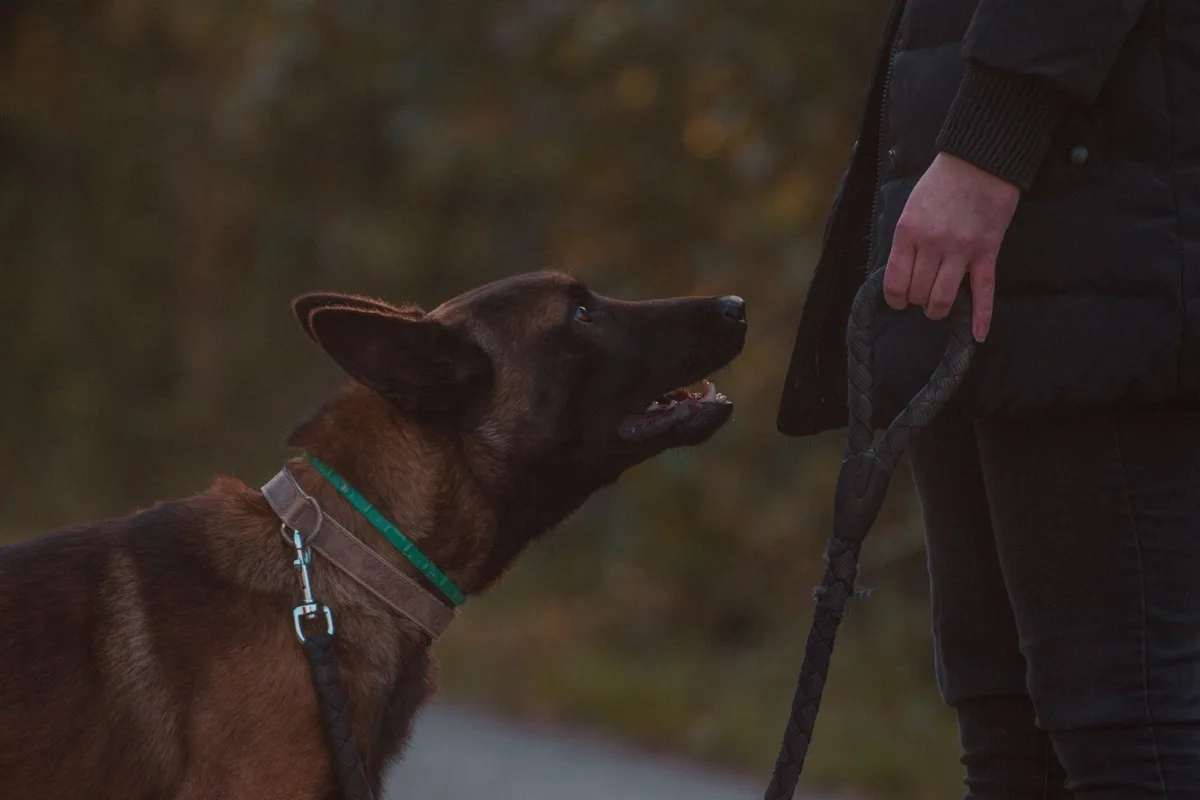
Inspect harnesses, slings, leashes, and hardware
Run clean fingers along webbing, padding, seams, elastic, handles, buckles, rings, clips, adjusters, and labels. Check both sides and every fold. Look for glazing, cuts, pulled threads, flattened padding, stiffness, corrosion, deformation, accidental opening, or adjustment that creeps under ordinary handling.
Confirm fit on the current dog according to the product instructions and professional plan. Inspect skin and coat contact areas before and after use. A mobility or lift-assist harness may distribute forces differently from a walking harness; never substitute one because the shapes appear similar.
The related first week with Atlas article shows how observation during early real-world use can reveal handling and routine questions. Feed those observations back into the maintenance record rather than treating the first week as separate from long-term care.
Clean fabrics without hiding damage
A dog mobility gear maintenance record should keep each product’s cleaning instructions visible. Remove loose debris before wet cleaning so dirt does not grind into fibers or mechanisms. Use only the cleaning agents, temperature, cycle, rinsing, drying, and disassembly steps allowed by the manufacturer. Avoid fragrances, solvents, disinfectants, pressure washing, machine drying, or heat unless expressly permitted.
Inspect while fabric is clean and dry. Wet webbing can hide abrasion and stretch differently. Do not reassemble damp padding into a closed frame or storage bag. Confirm all removable liners, boards, clips, and restraint paths return to their intended positions.
Use dog mobility gear maintenance records for recalls
Check the manufacturer’s safety notices and relevant official recall database using the exact product, model, and identifier. CPSC maintains recalls and product safety warnings for consumer products; other agencies may apply depending on product category. The absence of a search result does not prove a product is safe.
When a notice matches, follow the official stop-use, repair, replacement, refund, disposal, or contact instructions. Do not sell, donate, or pass on recalled equipment contrary to the notice. Record the date, source, action, and confirmation.
FDA explains that animal devices generally do not undergo FDA premarket approval and that manufacturers or distributors remain responsible for safety, effectiveness, and proper labeling. Do not describe ordinary mobility gear as “FDA approved” without accurate, product-specific evidence.
Record repairs without inventing them
Use only manufacturer-authorized parts and procedures when required. Record the symptom, date, photos, support case, instructions received, part number, person performing the work, completion, and post-repair test. A home fix that changes structure, restraint routing, load path, brake behavior, or dimensions may create a new hazard.
FTC health-products guidance requires express and implied health or safety claims to be truthful, not misleading, and appropriately substantiated. A testimonial, before-and-after story, or veterinary-looking image cannot prove that equipment prevents falls, treats arthritis, restores mobility, or guarantees safety.
Retire equipment at the right time
Remove an item from service when it is recalled under a stop-use instruction, cracked, bent, frayed, corroded, incomplete, unstable, incorrectly fitting, beyond a defined service life, no longer supported, impossible to clean, repeatedly malfunctioning, or unsuitable for the dog’s current ability or route.
Label it “do not use” and separate it from active gear while the manufacturer or qualified professional advises next steps. Do not keep it in the normal storage location where another caregiver can return it to service. Follow disposal instructions and protect identifiers or personal data on connected products.
Review dog mobility gear maintenance monthly
A monthly dog mobility gear maintenance review compares all active items with their baseline photos, instructions, recent use, cleaning history, repairs, recall search, and dog fit. Close incomplete actions and archive retired items. Shorten the interval when the manual, use severity, environment, or professional plan requires it.
Use the Product Education Field Notes archive for checks on stroller brakes, wheel debris, fabric spots, ramp grip, harness hardware, crate anchors, bowl materials, leash hardware, and bed support. Together, these guides support this schedule and the manufacturer’s current instructions.
Maintenance is successful when caregivers can explain why an item is in service today. The answer should be current inspection, correct fit, intact parts, verified instructions, and appropriate use—not habit or hope.
Sources and current official context
- FDA: How FDA Regulates Animal Devices
- FTC: Health Products Compliance Guidance
- CPSC: Recalls and Product Safety Warnings
- AAHA: Senior Care Kits
Related guides for dog mobility gear maintenance
Choose the focused dog guide that matches your next step:
- A Dog Stroller Brake Test Before Every Outing
- How to Remove Debris From Dog Stroller Wheels
- A Dog Stroller Fabric Spot-Cleaning Guide
- A Dog Ramp Surface Grip Check
- A Dog Harness Hardware Inspection Checklist
- A Vehicle Dog Crate Anchor Check
- A Collapsible Dog Travel Bowl Material Guide
- A Dog Leash Hardware Safety Check
- When to Replace a Dog Bed Support Layer
More focused Product Education guides
More dog-only guides for the next practical decision:
- A Folding Hinge Condition Checklist for Dog Strollers
- Verify a Dog Stroller Folding Latch Before Transport
- How to Check Dog Stroller Canopy Fabric and Supports
- A Dog Stroller Tether Anchor Connection Record
- How to Store Dog Mobility Gear in Damp Climates
- How to Dry a Dog Stroller Rain Cover Completely
- Cleaning a Dog Stroller Frame After Outdoor Use
- Track Dog Stroller Wheel Noise Before an Outing
- A Dog Stroller Handlebar Grip Wear Check
- How to Care for Dog Stroller Low-Light Visibility Trim
Frequently asked questions
What should be checked before each use of dog mobility gear?
Confirm the product and dog, all required parts, manufacturer limits, visible condition, controls, locks, brakes, attachments, cleanliness, current fit, route, and the dog’s voluntary comfort before use.
Can damaged mobility gear be repaired at home?
Follow the manufacturer’s authorized parts and procedures. Structural, restraint, brake, load-path, or fit changes should not be improvised; remove the item from service and contact the manufacturer or qualified professional.
Where should owners look for recalls?
Check the exact manufacturer and the relevant official recall or safety-warning database, such as CPSC for applicable consumer products. Recheck at intervals and follow any official stop-use or remedy instructions.