

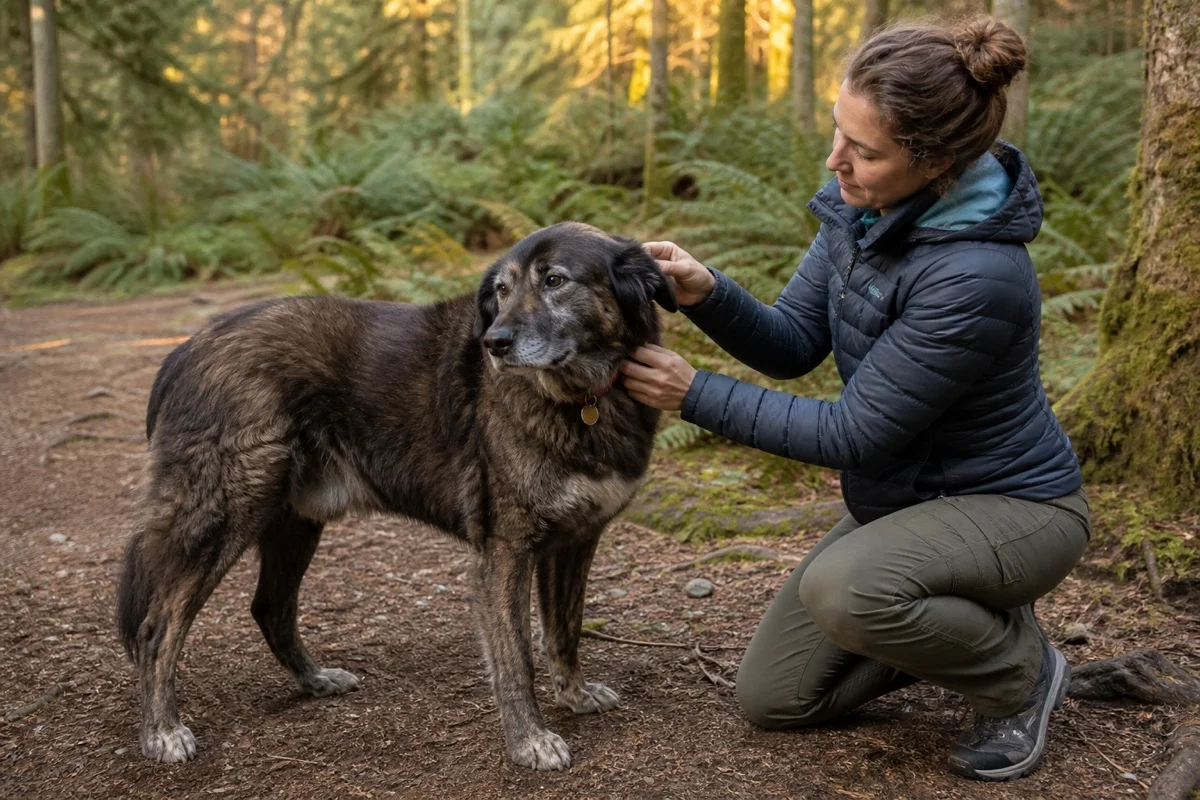
A dog tick check after hiking is a short transition between the trail and the rest of the day. It gives you a calm way to look over the coat, remove outdoor gear, and notice anything that deserves closer attention before the dog settles into the car or home. The routine does not need to feel clinical. It works best when it is predictable, gentle, and matched to the dog in front of you.
Ticks can be difficult to see in long, dark, or dense coats. The Centers for Disease Control and Prevention recommends checking pets every day, especially after time outdoors, and removing attached ticks promptly. That makes a consistent post-outing scan useful even after a short walk, not only after a long backcountry day.
Plan a dog tick check after hiking before you leave
Decide where the check will happen before the outing begins. A stable patch beside the vehicle, a quiet porch, or an uncluttered entry area is easier than improvising while everyone is tired. Choose a place with enough light to see the skin beneath the coat and enough room for a large dog to stand, sit, or lie down without being crowded.
Pack only what supports the routine: a plain towel, a comb appropriate for the coat, disposable gloves if you prefer them, a sealable container, and the contact details for your regular veterinarian. Prevention products are not interchangeable. The Environmental Protection Agency advises owners to use flea and tick products only for the species and weight listed on the label and to follow the label directions exactly. Ask your veterinarian what is appropriate for your dog and local tick risks.
- Choose a well-lit, stable checking place.
- Keep the leash attached until the area is secure.
- Let the dog settle before handling ears, feet, or the collar.
- Use a repeatable order so no area is skipped.
- Stop if the dog becomes painful, frightened, or difficult to handle safely.
Begin with a calm post-hike dog care transition
Finish the walk at an easy pace rather than stopping abruptly at the vehicle. Offer water according to your usual outing plan, move into shade when needed, and give the dog a moment to recover from the sights and smells of the trail. A rushed inspection can turn into wrestling, especially for a large dog who is excited to load or eager to lie down.
Remove packs, coats, or mobility accessories one piece at a time. Look at the areas each item covered before putting it away. Check the leash, harness, blanket, and travel mat for loose plant material or crawling insects. Keeping outdoor gear in one washable zone also reduces the chance of carrying a tick farther into the vehicle or home.
Use a repeatable dog tick check after hiking route
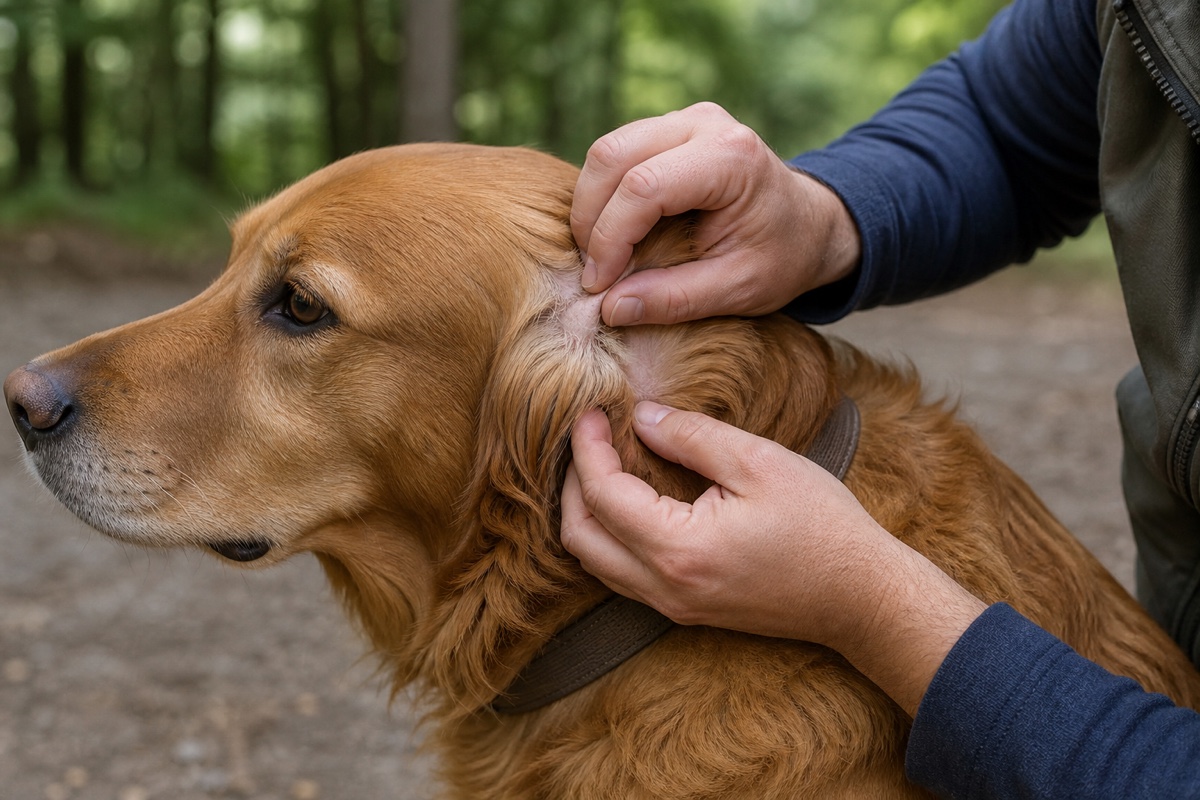
A consistent route is easier to remember than a random search. Begin at the head, follow the neck and body, then finish with the legs, feet, and tail area. Use your fingertips to feel slowly through the coat while your eyes follow the same path. You are looking for small changes in texture as well as visible insects.
Check around the head and neck
Look in and around the ears without pushing into the ear canal. Continue around the eyelids, under the chin, and beneath the collar. The CDC specifically highlights the ears, eyelids, and collar area as common places to check. Move gently through any thick ruff instead of pulling at tangles.
Follow the shoulders, chest, and body
Run your hands over the shoulders, along both sides of the chest, under the front legs, and across the back. Continue along the belly only if your dog is comfortable being handled there. For a dog who prefers to stand, work from one side and then the other instead of asking for a position that feels unstable.
Finish between the legs, toes, and tail
Check between the back legs, around the tail, and between the toes. Use good light and avoid forcing stiff joints into a wider range of motion. A dog with reduced mobility may be more comfortable lying on a familiar mat while one foot is checked at a time. The Steadavo Fit Guide can help you organize current measurements and handling questions for mobility-support conversations.
What to do when you find something
If you find a crawling tick, prevent it from disappearing into the coat or vehicle. If you find an attached tick, remove it promptly using the method your veterinarian recommends. Do not apply extra pesticide, essential oil, heat, or an improvised chemical to the dog. EPA guidance emphasizes using regulated products according to their labels; more product is not a safer shortcut.
If you are unsure whether the tick is attached, cannot remove it safely, or find irritation around the site, call your veterinarian. A photograph can help document where it was found, but it does not replace an examination. Your veterinarian can also explain whether local tick-borne diseases, preventive products, testing, or follow-up monitoring are relevant to your dog.
Record the useful facts, not every detail
A simple note is enough: date, trail or area, where the tick was found on the dog, whether it was crawling or attached, and what action you took. Keep any photograph with the note. This creates a practical record if you need to speak with your veterinarian later, and it may reveal that one route, season, or part of the yard deserves extra attention.
A dog tick check after hiking should not become a prolonged search that makes the dog avoid handling. If the first pass is calm and complete, let the dog rest. You can repeat a brief check later the same day, particularly for a dense coat, while continuing the daily checks recommended by the CDC.
Adapt post-hike dog care for a large or senior dog
Good footing matters. Use a nonslip mat if smooth pavement, tile, or a cargo surface makes standing uncertain. Keep the dog’s head and spine in a comfortable position, and bring the checking area to the dog rather than repeatedly repositioning a tired body. If two people are present, one can maintain a loose leash and offer calm reassurance while the other follows the inspection route.
Do not ask a dog to climb back out of a vehicle solely for the check if loading is difficult. Instead, make sure the cargo area is secure, cool, and well lit before working there. If a stroller or wagon is part of the outing, lock the brakes before checking the dog and inspect the liner and seams separately after the dog is settled elsewhere.
For future route planning, browse more practical Steadavo Field Notes and choose shorter, stable outings when the post-walk handling routine would otherwise ask too much. The best process is one you can repeat without making the outing feel like a test.
Finish checking a dog for ticks and reset the kit
Shake outdoor gear only in an appropriate outside area, then follow its care instructions. Wash or wipe the checking mat and towel as needed, put the comb back in its dedicated place, and replace used supplies. Check your own clothing and skin too. The goal is a clean handoff from trail equipment to home equipment, not a pile of gear that waits until the next departure.
If you use a flea or tick product, store it in its original packaging where children and animals cannot reach it. Keep the label available. EPA guidance notes that adverse reactions require prompt action and veterinary or poison-control advice, so do not transfer products into unmarked containers or rely on memory for dosing.
Make the check part of finishing well
The final minutes of an outing shape how repeatable the routine feels. A dog tick check after hiking can sit beside the ordinary steps you already take: water, a stable load, a quick gear scan, and a calm ride home. Repetition helps the dog understand what comes next and helps the handler notice when something is different.
Keep the process focused. Check the places ticks commonly hide, respond to what you actually find, and leave prevention and health decisions with your veterinarian. A short, consistent dog tick check after hiking protects the calm tone of the outing while giving you useful information for the days ahead.
Sources reviewed
- CDC: Preventing Ticks on Pets
- U.S. EPA: Controlling Fleas and Ticks on Your Pet
- CDC: Pet Travel Safety
Frequently asked questions
When should I do a dog tick check after hiking?
Do a calm check as part of the trail-to-car or trail-to-home transition, then continue the daily checks recommended by the CDC, especially after outdoor time.
Where should I check a dog for ticks?
Check in and around the ears, around the eyelids, under the collar, under the front legs, between the back legs, between the toes, and around the tail.
What should I do if I find an attached tick?
Remove it promptly using the method your veterinarian recommends. Call your veterinarian if you are unsure, cannot remove it safely, see irritation, or have health concerns.
Does a coat check replace flea and tick prevention?
No. A physical check and preventive products serve different roles. Ask your veterinarian what prevention is appropriate and follow every product label exactly.