

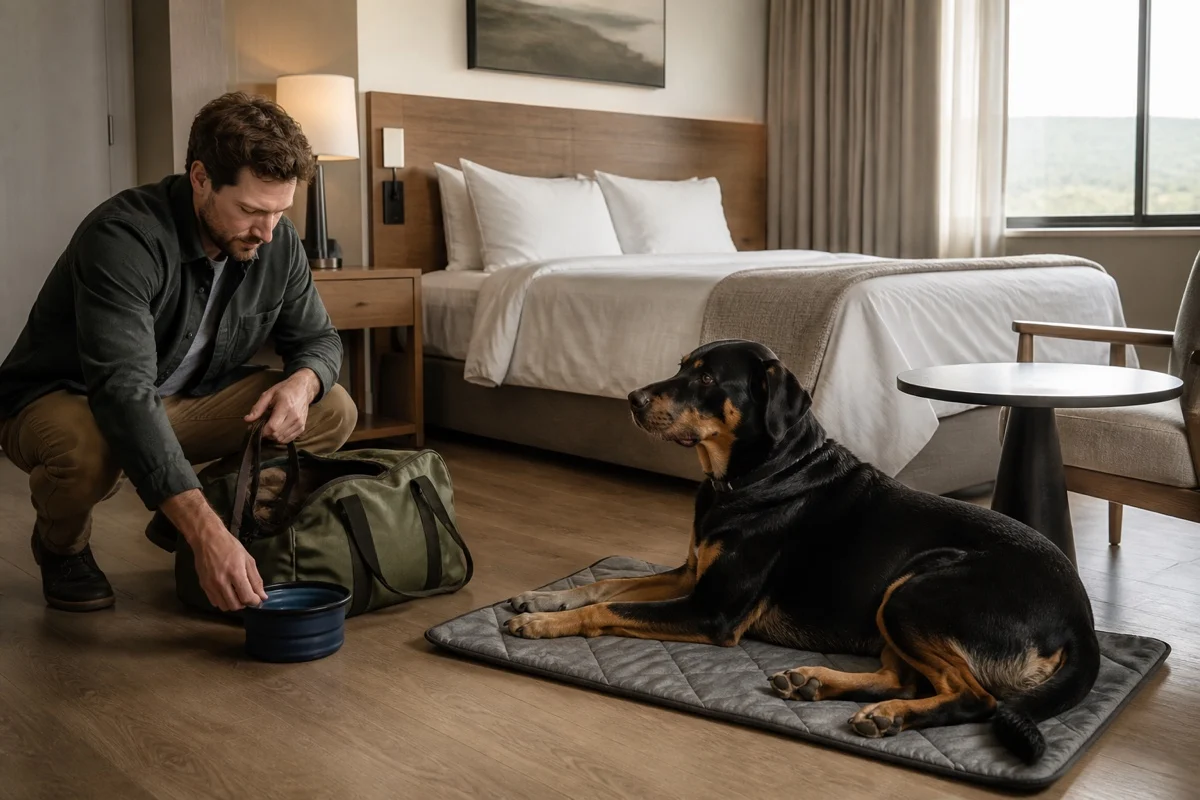
A hotel room setup for large dogs begins before the room door opens. The goal is not to recreate home or fill the room with gear. It is to give a dog a clear arrival path, a familiar place to rest, reliable access to water, and a simple route back outside. Ten calm minutes at check-in can make the rest of the stay easier to repeat.
Large dogs take up real turning and resting space, and unfamiliar rooms add elevators, narrow entries, housekeeping activity, and new sounds. Plan the room around those facts. Confirm the property’s current pet policy directly, carry the dog’s ordinary travel essentials, and let present behavior set the pace.
Verify the dog-friendly lodging plan before arrival
“Pet friendly” is not a complete policy. Contact the specific property and confirm whether pets are allowed in the room type you booked, along with current fees, number limits, size or breed rules, areas where pets may walk, and whether an animal may ever be left unattended. Ask how to reach the relief area without crossing a busy lobby at peak times.
For travel across state lines, the U.S. Department of Agriculture notes that the receiving state or territory may set animal health requirements. Check the destination’s official rules and speak with your veterinarian early enough to complete any required documentation. Save the property confirmation and travel records where you can reach them without unpacking the entire vehicle.
- Confirm the exact property and room policy.
- Ask about relief areas, elevators, stairs, and parking access.
- Check destination health-document requirements.
- Identify a nearby 24-hour veterinary hospital.
- Keep reservations, records, and contact numbers together.
Build a hotel room setup for large dogs in zones
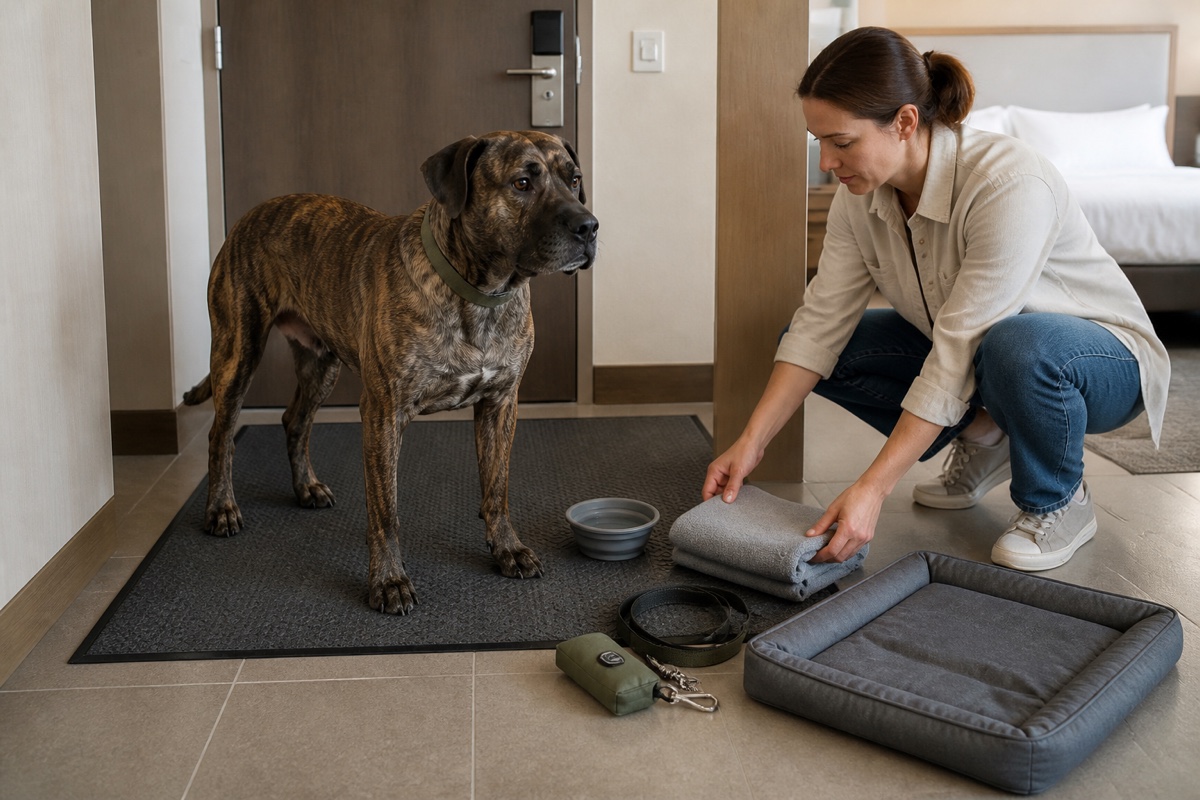
Use three small zones: arrival, rest, and supplies. The arrival zone sits just inside the room and holds the leash, towel, waste bags, and a nonslip surface. The rest zone is quiet, away from the door swing and the main walking path. The supply zone keeps food, medication, grooming items, and documents contained and out of reach.
Zones reduce decisions. When the dog comes back from a walk, the leash returns to one place and wet feet stop on one surface. When the dog needs to settle, the familiar mat is not moved to make room for luggage. The room remains understandable even when the handler is tired.
Start the hotel room setup for large dogs quietly
One person should enter first when possible. Check that connecting doors, balcony doors, and windows are closed and secure. Move rolling luggage out of the entry path, look for dropped food or medication, and note cords, sharp furniture corners, slippery flooring, and gaps behind heavy furniture. Do not let the dog explore until the room is ready.
Bring the dog in on leash and pause on the nonslip mat. Offer a short, supervised tour rather than free roaming. Show the water location and rest mat, then let the dog choose whether to stand, sit, or lie down. A calm arrival is more useful than trying to make the room exciting.
Give a large dog enough resting space
A large dog needs room to lie in a normal resting posture without blocking the door, bathroom, or the handler’s path at night. Place the travel bed or mat on a stable surface where chairs, luggage, and housekeeping carts will not crowd it. Avoid placing it directly under a heating or cooling vent.
Use a washable layer that already smells familiar. Keep one side open so the dog can rise without backing into furniture. If mobility is limited, test the route from bed to door while the room is fully lit. The Steadavo Fit Guide offers a way to organize current body measurements and handling questions before choosing mobility support.
Do not assume the hotel bed is the safest resting place. Jumping up or down may be difficult, the surface may be slippery, and property rules may differ. A defined floor-level rest area is easier to keep consistent and easier to protect from a sudden knock at the door.
Keep large dog travel supplies predictable
Set the water bowl where it cannot be kicked into an electrical cord or the main walkway. Bring the dog’s usual food and bowl instead of changing routines during the trip. The CDC advises travelers to carry water, food, a bowl, leash, waste bags, grooming supplies, medication, first-aid items, and travel documents.
Store food and medication in closed containers, separate from hotel snacks and housekeeping supplies. Keep written instructions with medication. If temperature-sensitive items require refrigeration, confirm the appliance is working and suitable before relying on it; contact the property if you need an alternative.
Plan every door movement
The room door is the highest-traffic point in the setup. Put the leash on before opening it, even for a quick handoff. Use the deadbolt and privacy sign according to property rules, and arrange housekeeping directly rather than assuming a sign will prevent every entry. Keep the dog under active supervision when staff need access.
Listen before stepping into the hall. Elevators can open onto another dog, luggage cart, or group of people. If the hallway is busy, wait inside with the door closed. Choose quieter relief times when practical and keep the return route simple.
Fit mobility gear without blocking the room
If a stroller, wagon, ramp, or support harness travels with you, decide where it will stand before unloading every bag. Lock wheels, keep exits clear, and avoid leaning equipment where it can fall. Wet or dirty wheels belong on a washable layer, not beside the dog’s water or bed.
Confirm the folded equipment can move between the vehicle, lobby, elevator, and room without forcing the dog through a crowded path. The published SUV trunk fit guide provides a practical method for checking cargo openings, folded gear, and usable vehicle space before departure.
A hotel room setup for large dogs should remain usable with the equipment folded and with the dog resting. If gear consumes the only safe floor space, return nonessential items to the vehicle when parking and security conditions allow.
Keep pet rules and service-animal rights distinct
Ordinary pets are governed by the property’s pet policy. Service animals are covered by different rules. The U.S. Department of Justice explains that a hotel may not limit a guest with a service animal to designated pet-friendly rooms, and it distinguishes trained service animals from emotional support or companion animals under the Americans with Disabilities Act.
Do not present a pet as a service animal to avoid a fee or restriction. If you travel with a service animal, consult current official ADA guidance and the property directly about access and practical arrangements. State or local rules may also apply.
Practice the morning and evening reset
At night, place shoes, luggage, and charging cables outside the path from the rest mat to the door. Prepare the leash and waste bags for the first trip outside. Keep a small light available so you do not need to cross a dark unfamiliar room while handling the dog.
In the morning, refresh water, check the mat and floor, and repack only what you need for the next outing. Observe the dog’s appetite, movement, breathing, bathroom routine, and willingness to continue. The CDC recommends a daily health check while away from home and contacting a veterinarian when you have concerns.
Leave the room ready for a clean departure
Before checkout, take the dog outside with one handler while another person scans the room. Collect waste, wipe the bowl, bag damp towels, and check under the bed and furniture without moving heavy items. Pack medication and documents separately so they do not disappear into general luggage.
Inspect the entry mat and travel bed before loading them. Keep the dog secured while the room door is open and while luggage moves through the hallway. A final photograph of the empty room is optional, but a written packing sequence is often more useful for repeating the routine on the return trip.
Keep the room practical, not perfect
The best hotel room setup for large dogs creates a few reliable cues in an unfamiliar place. It protects the door, gives the dog a stable resting area, keeps supplies reachable, and leaves enough floor space for ordinary movement. It also respects the property and the people working there.
Start with verified rules, then build the arrival, rest, and supply zones around the room you actually receive. Watch the dog in front of you, simplify when needed, and keep exits easy. A calm hotel room setup for large dogs turns one overnight stop into a routine the family can use again.
Sources reviewed
- CDC: Pet Travel Safety
- USDA APHIS: Take a Pet From One U.S. State or Territory to Another
- U.S. Department of Justice: Frequently Asked Questions about Service Animals and the ADA
Frequently asked questions
What should a hotel room setup for large dogs include?
Use a controlled arrival zone, a familiar floor-level rest space, stable water placement, contained supplies, clear walking paths, and an easy route back outside.
Should a large dog sleep on the hotel bed?
Do not assume the bed is permitted or safe. A familiar floor-level mat avoids jumping, protects a clear routine, and can be placed away from the door and main walkway.
Can a dog be left alone in a hotel room?
Follow the specific property’s current policy. Do not assume a general pet-friendly label permits an animal to be left unattended.
Are hotel pet policies the same as service-animal rules?
No. Ordinary pets follow property policies, while trained service animals are covered by separate legal rules. Consult current official ADA guidance for service-animal access.