

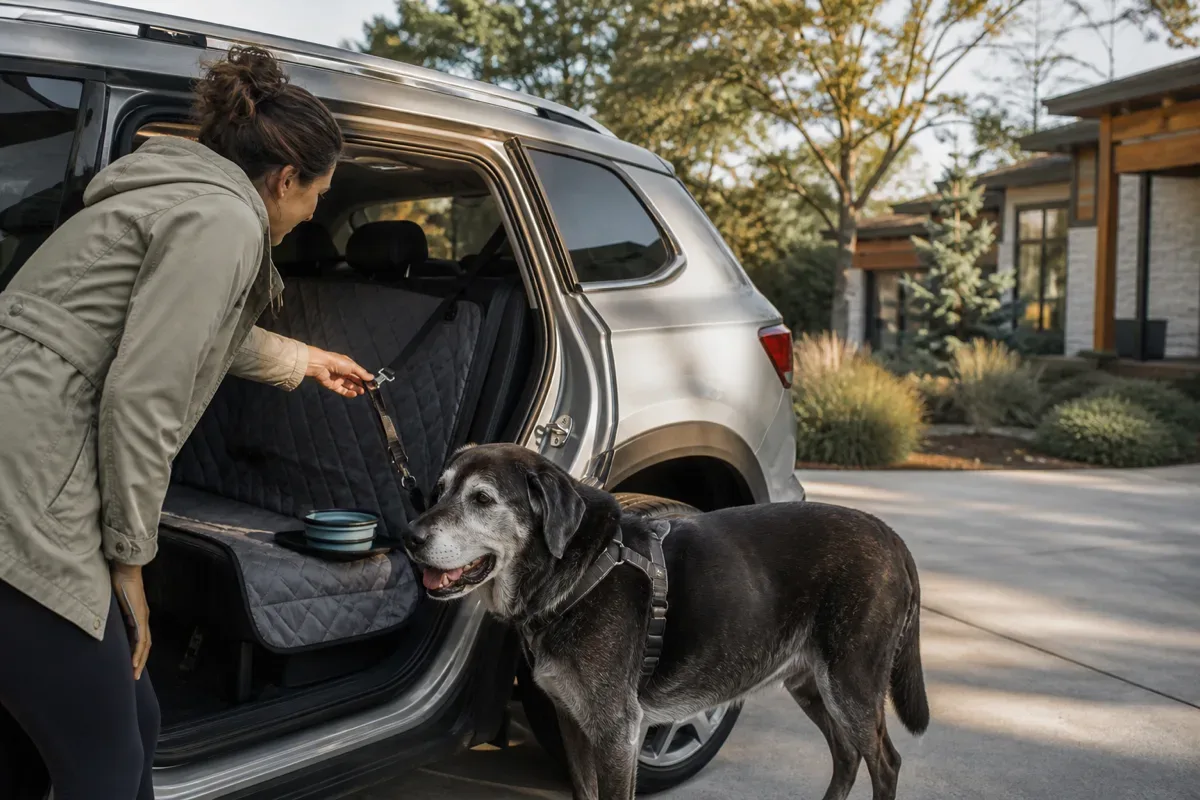
Large dog road trip planning is the work of matching a real dog, a real vehicle, and a real route before departure day. A checklist should do more than remind you to pack food. It should confirm that your dog is suited to the trip, the secured travel space works at full size, required records are current, stops are realistic, and the arrival plan does not depend on an already-tired dog adapting instantly.
Large and senior dogs make weak assumptions visible. A tight turn into the back seat, a slippery cargo floor, a water bowl buried under luggage, or a two-hour gap between suitable stops can turn a manageable drive into a stressful one. The solution is not more gear. It is a clear sequence tested while the vehicle is parked and there is still time to change the plan.
Large dog road trip planning starts with the dog
Begin with the dog’s present routine, not the distance you hope to cover. Write down the longest recent car ride that ended calmly, the dog’s usual meal and medication times, normal bathroom intervals, comfortable walking duration, response to unfamiliar places, and any difficulty entering or leaving the vehicle. A dog who manages a short local ride may not be ready for a multi-day itinerary without gradual practice.
Run two rehearsal trips. The first can be a parked-vehicle session followed by a short loop and a familiar walk. The second should include the exact restraint or crate, loaded luggage, a planned stop, water, and the same entry and exit sequence you intend to use. Note panting, drooling, vocalizing, repeated position changes, reluctance to enter, unstable footing, and recovery after the ride. These are observations to discuss, not diagnoses.
Use the Steadavo Fit Guide to keep current body and equipment measurements organized. Measure the usable vehicle space with doors closed and seats in their travel positions. A large dog needs room to assume a natural position within the selected restraint system; a product label or vehicle category cannot substitute for an actual fit check.
Build a large dog road trip planning calendar
Work backward from departure. Several weeks ahead, confirm the dog’s identification, microchip registry contact, routine preventive care, refill needs, and whether the route crosses a state or jurisdiction with current animal-entry requirements. USDA APHIS directs travelers to the destination authority for state-to-state rules because health certificates, vaccination documentation, testing, or treatments can vary. Recheck the official page close to departure instead of relying on a saved summary.
One to two weeks ahead, confirm accommodation rules in writing, including dog size, number, unattended-pet policy, designated relief areas, fees, and any floor or room restrictions. Save the name of the person or policy page you checked. Map the regular clinic, destination clinic, and a 24-hour emergency hospital. Do not assume the nearest search result is open overnight or accepts walk-ins.
During the final two days, portion food, label medications from the original prescription instructions, charge lights and phones, download the route for offline use, check weather and road advisories, and conduct the fully loaded vehicle rehearsal. Keep the last evening ordinary. A late grooming session, unfamiliar food, or exhausting exercise can add variables just before travel.
Test the secured vehicle setup while parked
AAHA travel and canine safety guidance emphasizes appropriate confinement or restraint and acclimation before travel. Choose a setup appropriate to the individual dog and vehicle, and follow both the product manufacturer and vehicle manufacturer. This is where large dog road trip planning becomes a real fit exercise: a harness attachment, secured crate, carrier, or properly installed barrier has to work with the specific seating position, anchor points, door path, ventilation, and dog dimensions. A barrier alone may limit roaming without providing crash protection; do not imply two systems are equivalent when their purposes differ.
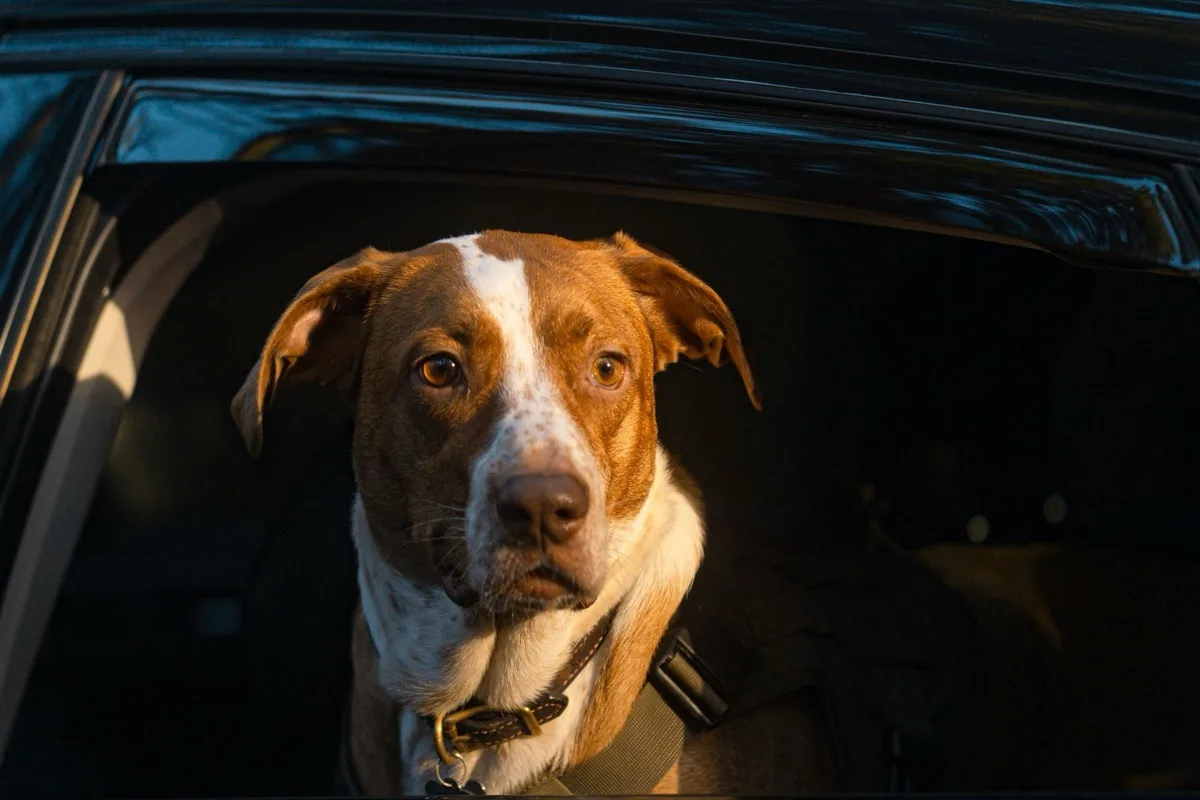
Remove loose objects that could shift. Put a stable, washable layer under the dog, but ensure it does not obstruct belts, latches, vents, or crate anchoring. Check that the dog cannot step on a window control, reach the driver, or exit when one door opens. Never plan for a dog to ride loose in an open pickup bed, sit on a driver’s lap, or travel with the head outside a moving vehicle.
Practice the door sequence with two people if possible: one person controls the leash or restraint while the other manages the door and luggage. For a dog using a ramp or lift-assist device, rehearse on level ground. If entry requires pulling, jumping beyond current ability, or a rushed transfer near traffic, redesign the setup before the trip.
Plan each driving block around usable stops
A map pin is not automatically a dog stop. Use satellite views and recent official information to find a place where you can park safely, move away from traffic, reach a small relief area on leash, and return without crossing a chaotic loading zone. Note shade, surface, lighting, and seasonal access. Build a backup on both sides of each primary stop.
Set the interval from your dog’s normal needs and rehearsal data rather than chasing a universal number. Senior dogs, dogs taking certain medications, dogs drinking more than usual, puppies, and dogs new to travel may need a different rhythm. Stop before urgency or stiffness makes the exit difficult. Keep breaks calm: leash first, controlled exit, relief, water, a brief sniff, a short observation, and return to the secured space.
The SUV weekend routine is a useful companion for a short vehicle-based outing. For a longer route, copy its calm load-and-unload rhythm into every stop instead of inventing a new process each time.
Pack supplies by access order, not by category
Traditional packing lists group all food together and all equipment together. Roadside use is different. In practical large dog road trip planning, the item needed at the next stop should not sit beneath the overnight bag. Build an “every stop” bag with leash, waste bags, water, bowl, towel, and the next needed medication if the prescribing instructions allow it to be carried there. Put one meal and a small reserve in an accessible sealed container. Keep the full food supply, backup bedding, grooming tools, and destination equipment deeper in the vehicle.
- Identity: collar tag, microchip registry details, current photo, and owner contact card.
- Care records: veterinarian contact, medication list, relevant records, and destination requirements.
- Daily care: familiar food, safe water, bowls, medications, waste bags, bedding, and cleaning supplies.
- Vehicle use: restraint or secured crate, non-slip layer, ramp or assist device if already introduced, and a spare leash.
- Contingency: extra food and water, flashlight, weather layer, first-aid supplies chosen with veterinary guidance, and backup route details.
Keep food, medication, and cleaning products separated. Protect medications from heat and direct sun according to their labels; if storage requirements are unclear, ask the prescribing clinic before departure. Never transfer pills into an unmarked bag simply to save space.
Use a large dog road trip planning stop card
A small card kept near the driver reduces rushed decisions. List the next stop name, safe parking note, expected drive time, backup stop, dog’s next meal or medication checkpoint, and emergency contact. The passenger can update it after each break. A solo driver should only review it while parked.
At every stop, make a ten-second assessment before driving again: breathing settled, gait consistent with the dog’s current baseline, water offered, restraint reconnected correctly, doors closed, loose supplies secured, and cabin temperature comfortable. If the dog shows a meaningful change, pause the itinerary and contact a veterinary professional rather than pushing toward a booking.
Protect the dog from heat and unattended-vehicle risk
The CDC warns that a parked vehicle can heat rapidly even with windows open. A road-trip plan must not depend on leaving a dog alone in the car while people eat, shop, check in, or handle an attraction. Use drive-through or curbside options, travel with another adult who can remain with the dog in a safely climate-controlled situation, or choose stops where the dog can accompany you under current rules.
Cabin climate while moving also needs observation. Sun through one side window, blocked rear vents, thick bedding, crowding from luggage, and an anxious dog’s activity can make the dog’s area different from the front seat. Check the actual space by hand and by watching the dog. Water should be accessible at stops, but avoid forcing a large volume at once or changing the dog’s usual feeding plan without veterinary advice.
Complete a large dog road trip planning arrival check
Arrival is part of large dog road trip planning, not the moment the plan ends. Before bringing the dog inside, one person should inspect the room or rental for open exterior doors, cleaning products, food, medication, cords, unstable furniture, balcony gaps, slippery floors, and other animals. Set up water, a familiar bed, and a clear resting zone first.
Offer a calm relief walk, then restore the familiar sequence of water, meal or medication as directed, quiet rest, and a short observation. Delay greetings and exploration when the dog is tired. Record appetite, elimination, movement after the drive, settling, and any unusual behavior. If the next day begins with a major hike or family event, revise it when the dog has not returned to baseline.
Use the Dog Travel Field Notes archive for focused guides on packing, vehicle entry, hotel check-in, highway stops, food storage, identification, and senior-dog RV routines. Together, these checklists form a practical travel system built around the same trip plan.
A road-trip checklist works best when walking distance, vehicle space, and loading order are considered together.
When those factors suggest an optional mobility solution, review Atlas for road-trip planning and compare its current details with your dog, vehicle, and itinerary.
Sources and current-rule context
- AAHA: Traveling Safely With Your Pet
- AAHA Canine Lifestyle and Safety Assessment
- CDC: Heat and Pets
- USDA APHIS: State-to-State Pet Travel
Related guides for large dog road trip planning
Choose the focused dog guide that matches your next step:
- A Large Dog Travel Packing Checklist That Stays Practical
- A Dog Vehicle Entry and Exit Routine Before Road Trips
- A Dog-Friendly Hotel Check-In Checklist
- Flying With a Large Dog: Preparation Before Booking
- A Dog Ferry Travel Checklist for a Calmer Crossing
- A Dog Highway Rest Stop Routine for Long Drives
- Safe Dog Travel Food and Water Storage
- A Dog Travel Identification Checklist
- A Senior Dog RV Travel Routine
More focused Dog Travel guides
More dog-only guides for the next practical decision:
- How to Acclimate a Dog to a Travel Crate Before Departure
- How to Locate an Emergency Vet Before a Dog Trip
- A Dog Airport Relief Area Plan Before Flight Day
- An Interstate Dog Health Certificate Checklist
- How to Switch Drinking Water During Dog Travel
- A Dog Boarding Handoff Checklist for Travel Days
- How to Pack a Dog Overnight Travel Bag
- A Dog Lodging Noise and Rest Plan
- A Dog Car Sickness Observation Log for Travel
- How to Plan a Rest Day During a Dog Trip
Frequently asked questions
How early should large dog road trip planning begin?
Begin several weeks ahead when records, veterinary questions, equipment fit, accommodation rules, or gradual vehicle practice may need attention. Recheck dynamic destination and route requirements close to departure.
How often should a large dog stop during a road trip?
Use the dog’s normal routine, age, health, medications, rehearsal rides, and the quality of available stops rather than a universal interval. Stop before urgency, stiffness, or distress changes the exit.
Should a large dog use a harness or a crate in the car?
The appropriate system depends on the dog, vehicle, product instructions, anchor points, and purpose. Compare verified restraint functions and fit rather than assuming every harness, crate, or barrier provides the same protection.