

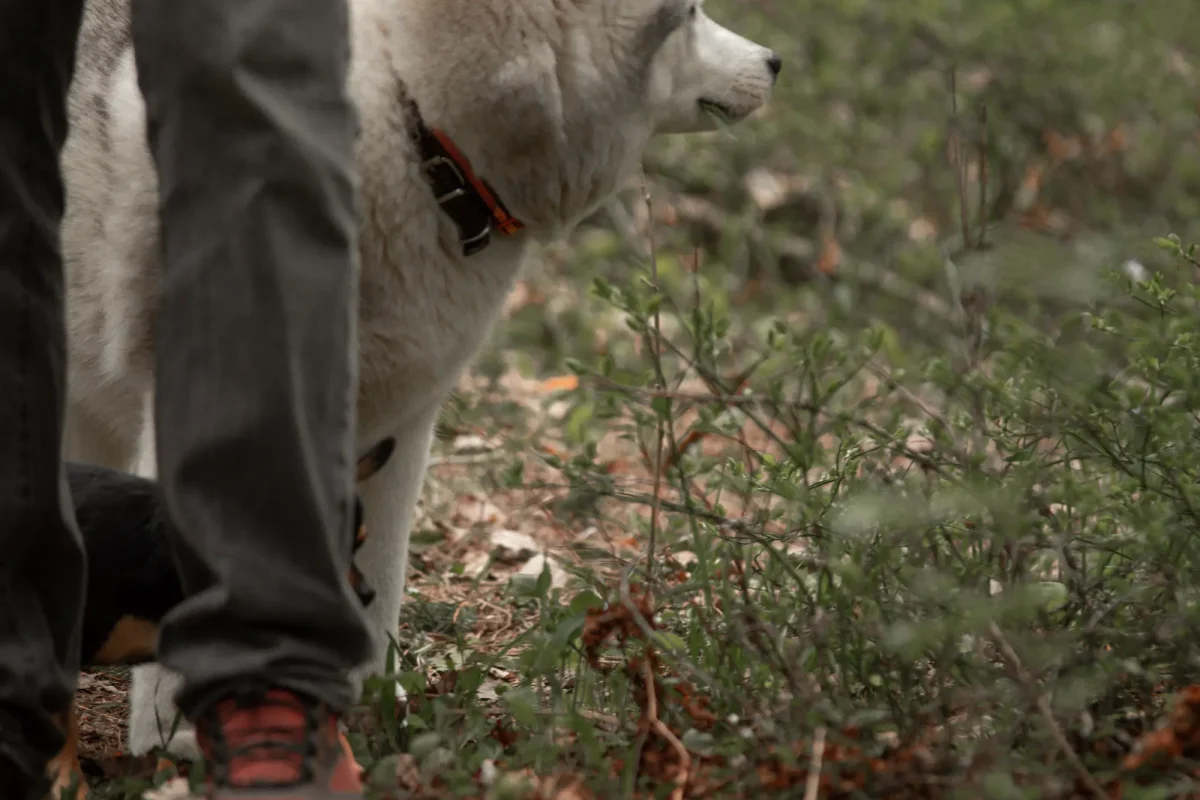
Dog day hike planning begins before you decide how many miles to walk. A useful plan matches one dog’s current ability with a specific trail, surface, weather window, access rule, water supply, and turnaround point. It also leaves enough energy for the return. The summit, overlook, or map distance is optional; a calm trip back to the vehicle is not.
Day hikes can feel simple because there is no overnight camp to organize. That simplicity is exactly why owners may skip important checks. Park rules can restrict where dogs may go, a shaded route can become exposed later in the day, recent rain can change footing, and a dog who looks eager at the trailhead can still overreach on the return. Put the decisions on paper while conditions are easy to evaluate.
Dog day hike planning starts with a route audit
Open the official land-manager page, not only a map app or social post. Confirm that dogs are allowed on the exact trail and in every area you intend to use. Check leash length, seasonal restrictions, wildlife closures, parking, waste rules, water access, and whether a permit is required. National Park Service guidance repeatedly emphasizes checking the destination before arrival because rules vary across parks and even among trails within one park.
Read the route in both directions. Note total distance, cumulative elevation, steep steps, narrow bridges, scree, boardwalks, water crossings, exposed rock, and the longest section without shade. A broad “moderate” rating written for people does not describe whether a large dog can turn comfortably or whether a senior dog can maintain traction on the descent.
Use the Outdoor Adventure Field Notes archive for focused routines covering trail water, wet footing, foxtails, winter paws, backpacks, leashes, and canoe introductions. Each check supports the same route-level decision.
Build a dog day hike planning weather window
Check the forecast for the trail elevation and hour, not only the nearest town’s daily high. Record temperature, humidity, sun exposure, wind, precipitation timing, thunder risk, air quality, and recent fire or flood notices. Then decide a start window and a cancellation point. “We will see how it feels” is not a weather plan when reaching the first shaded rest point already requires effort.
UC Davis and Cornell veterinary guidance notes that all dogs can develop heat illness, with higher risk for senior, short-nosed, overweight, thick-coated, unacclimated, and heart or lung disease dogs. Move an outing to a cooler time or choose a shorter shaded route rather than treating extra water as permission to keep the original plan. Never leave a dog in a parked vehicle before or after the hike.
After rain, reconsider more than mud. Wood can become slick, creek levels may rise, clay can accumulate between paw pads, and the return descent may be harder than the climb. In dry seasons, check foxtail conditions and local fire restrictions. Dynamic trail, weather, water-quality, and hazard notices should be rechecked the morning of the outing.
Match distance to recent, repeatable ability
Use recent walks as evidence. Record the dog’s comfortable time on similar footing, pace, number of voluntary pauses, recovery after returning home, and behavior later that day. A dog who completed a distance once is not automatically conditioned to repeat it on steeper, hotter, rougher, or higher terrain.
Plan the first outing below the dog’s demonstrated limit. For an older dog, treat rising, turning, vehicle entry, and the next morning as part of the hike’s recovery cost. A mobility aid can support access in an appropriate setting, but it does not turn an unsuitable trail into a suitable one. The related senior dog camping checklist shows how an overnight plan also protects the energy needed after the trail.
Choose a primary turnaround point and an earlier backup. Describe them by a visible landmark and time, not only mileage. Turn around at the earlier point when heat, footing, crowding, wildlife activity, pace, or dog comfort changes. A route is successful when you follow the decision rule, even if you never reach the planned viewpoint.
Pack water, food, and recovery supplies for the dog
Carry all drinking water when natural sources are uncertain. Streams and lakes can contain pathogens, harmful algae, or contaminants even when they look clear. Offer water during planned pauses and watch how your dog drinks compared with normal. Do not force large amounts or encourage a dog to drink from an unfamiliar water body.
Pack a dog-specific kit in the order you will use it: secure leash and correctly fitted harness, water and bowl, waste bags plus a sealed carry-out method, simple first-aid materials selected with veterinary guidance, current identification, a small familiar food portion if appropriate, towel, and a light rest layer. Bring more water than the outward distance appears to require because delays and the return still count.
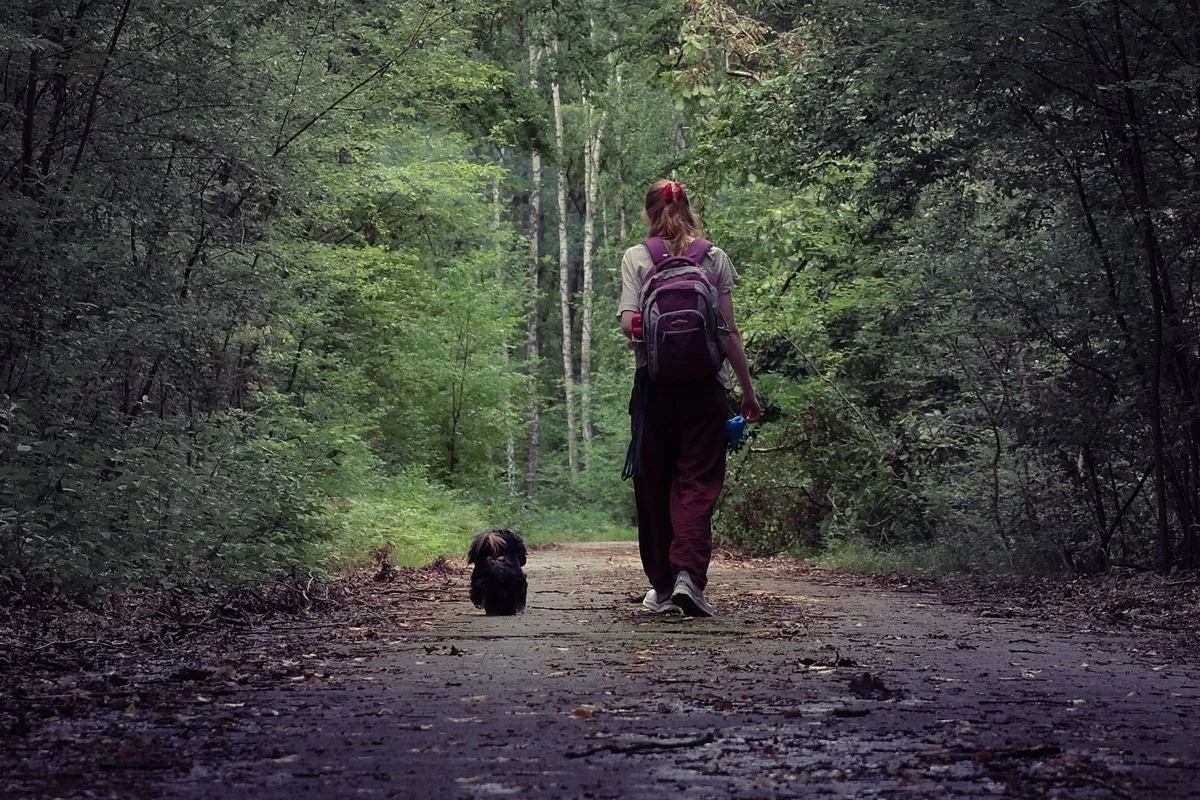
Do not give a dog a loaded backpack simply because the dog can wear one. Fit, conditioning, heat, chafing, and load distribution matter, and some dogs should not carry a load. If a pack is used, introduce it empty on short local walks and ask a veterinary or rehabilitation professional about individual limitations.
Use a dog day hike planning trailhead check
At the trailhead, stop before unloading. Compare actual conditions with the plan: temperature, wind, parking congestion, trail notice board, wildlife alerts, smoke, mud, and the dog’s behavior after the drive. Confirm water volume, leash attachment, identification, and the location of the first rest point. If the official notice has changed, follow the current notice.
Unload on the side away from moving vehicles when possible. Attach the leash before opening the door or crate. Give the dog a quiet relief opportunity, then begin below the pace the dog offers in the first excited minutes. Starting fast can hide the amount of effort reserved for the return.
Manage the leash as a safety and courtesy system
NPS B.A.R.K. principles call for bagging waste, always using a leash, respecting wildlife, and knowing where dogs may go. A physical leash protects the dog, other visitors, and wildlife only when the handler can manage its length without wrapping it around people, vegetation, or the dog’s legs. Keep both hands available on technical or crowded sections.
Step aside early for oncoming hikers, horses, bicycles, or dogs according to the trail rules. Create distance before greetings, and decline interactions when your dog is tired, worried, overexcited, or guarding space. Do not allow a dog to approach wildlife, den sites, carcasses, nests, or water edges with visible algae.
Carry waste out even when a bag station is missing. Leaving a bag beside the trail is not a completed cleanup. On narrow routes, plan how you will carry used bags without attaching them where they swing against the dog or contaminate food and water gear.
Watch heat, paws, ticks, and movement at each pause
Use the same short check every time: breathing trend, gum appearance if your veterinarian has taught you what is normal for your dog, willingness to drink, pace, posture, paw placement, slipping, lagging, and interest in continuing. Look at the dog you have now, not the enthusiastic dog who left the vehicle.
Check paw pads for cuts, embedded debris, heat injury, ice buildup, or developing abrasion. Scan legs, chest, ears, face, collar area, between toes, and tail region for ticks or plant material. CDC recommends checking dogs for ticks daily after outdoor exposure and discussing locally appropriate prevention with a veterinarian.
Do not use a planned rest to talk yourself out of a meaningful change. Persistent heavy panting, repeated lying down, altered gait, confusion, vomiting, marked weakness, or inability to continue normally calls for stopping, cooling or first-aid steps as professionally directed, and veterinary advice. Ice water is not an appropriate default response to suspected heatstroke; contact a veterinarian promptly.
Run a dog day hike planning turnaround rule
A practical dog day hike planning rule uses the earliest of four limits: planned landmark, planned time, environmental change, or dog change. If any one arrives, turn around. The rule protects owners from negotiating with themselves after investing effort in the outward route.
On the return, shorten the leash where footing or traffic requires control, continue water and observation pauses, and resist adding an unplanned spur. Descents can demand different muscle control and may expose fatigue that was not obvious uphill. Keep enough time for a calm vehicle load before darkness or weather arrives.
Close the dog day hike planning loop at home
After the hike, offer water, restore the normal rest routine, inspect paws and coat in good light, and complete a systematic tick check. Record route, surface, weather, duration, stops, water used, turnaround reason, gait, settling, appetite, elimination, and next-day recovery. These notes make the next plan more accurate.
Clean and dry the leash, bowl, rest layer, and any pack. Replace used first-aid items and discard damaged gear. Review whether the route needs a shorter repeat, a cooler season, a different surface, or removal from the list. Then explore the Field Notes library for the next connected routine rather than collecting isolated tips with no shared baseline.
A good hike is not measured by maximum distance. It is measured by how well the plan preserved choice: the choice to start, pause, turn around, and arrive home with a dog whose comfort remained more important than the destination.
A day-hike plan should match the dog’s observed capacity, the verified route, weather, water, and a clear turnaround point.
For suitable portions of an outing, evaluate Atlas within the day-hike plan only after comparing current product details with the route and transport setup.
Sources and current trail context
- National Park Service: Hiking With Pets
- National Park Service: B.A.R.K. Principles
- CDC: Preventing Ticks on Pets
- UC Davis: Heat-Related Illness in Dogs
Related guides for dog day hike planning
Choose the focused dog guide that matches your next step:
- How to Build a Dog Hiking Water Plan
- How to Check Dog Trail Footing After Rain
- A Dog Beach Day Safety Checklist
- A Dog Snake-Avoidance Plan for Shared Trails
- A Dog Foxtail Check After Dry Trail Outings
- Dog Winter Hiking Paw Protection Without Overpacking
- A Dog Backpack Fit and Load Checklist
- A Dog Leash Plan for Calm Shared Trails
- How to Introduce a Dog to a Canoe and Life Jacket
More focused Outdoor Adventure guides
More dog-only guides for the next practical decision:
- A Calm Dog Trailhead Arrival Routine
- A Dog River Crossing Decision Guide for Hikers
- How to Set Up a Dog Campsite Rest Zone
- A Dog Campfire Safety Boundary at Camp
- A Dog Wildlife Encounter Distance Plan
- A Dog Hike Turnaround Decision Checklist
- How to Keep a Dog Post-Hike Recovery Log
- A Dog Winter Trail Hydration Plan
- A Dog Hiking First Aid Kit Inventory
- A Dog Trail Forecast Go-or-No-Go Check
Frequently asked questions
How far should a dog go on a first day hike?
Choose a route below the dog’s recent, repeatable ability on similar terrain. Use an earlier backup turnaround and include the return, vehicle transfer, evening, and next-day recovery in the assessment.
Can a dog drink from a stream during a hike?
Do not assume natural water is safe because it looks clear. Carry drinking water, check current local water advisories, and keep dogs away from suspicious algae or contaminated water.
What should end a dog day hike early?
Turn around when the planned time or landmark arrives, conditions change, or the dog shows a meaningful change in breathing, gait, pace, posture, willingness, or recovery. Seek veterinary guidance for concerning signs.