

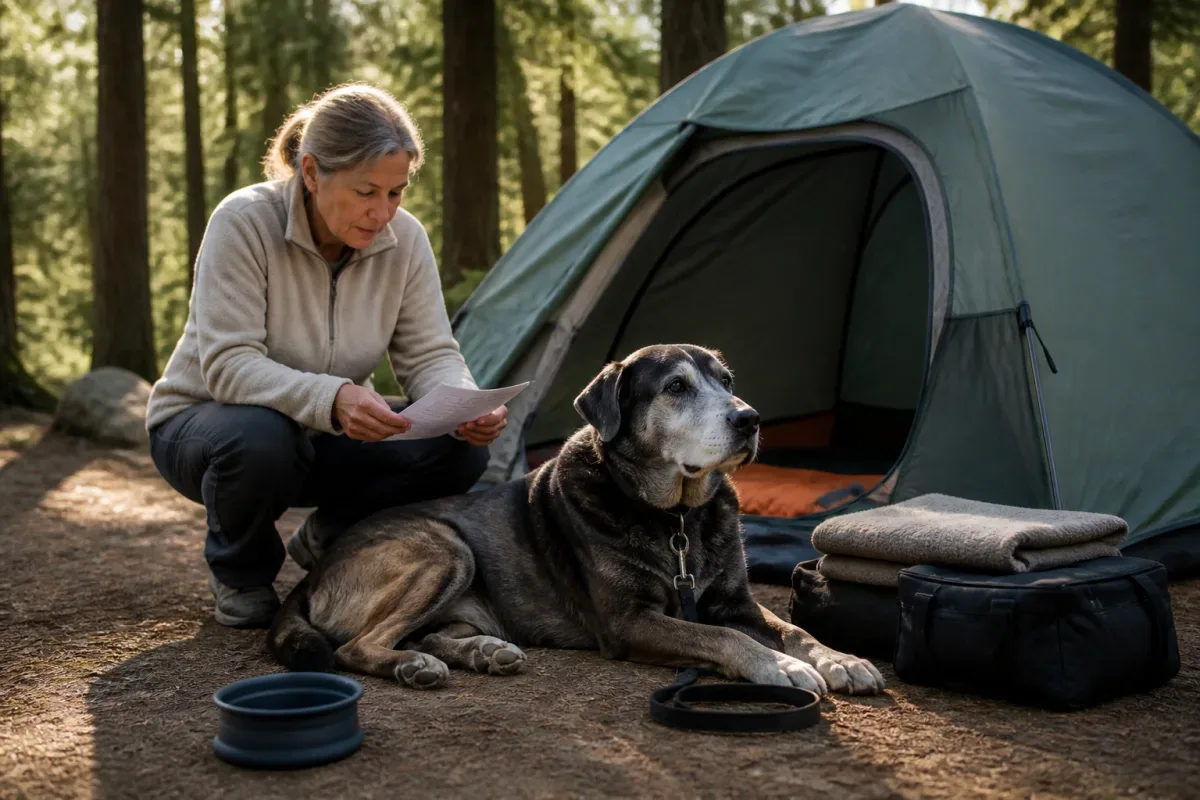
A senior dog camping checklist is most useful before the reservation is made, not when the car is already packed. Older dogs often enjoy new smells, quiet time, and being close to their people, but a campsite can also add heat, uneven footing, wildlife, noise, and longer distances than expected. The goal is not to prove that your dog can keep up with a younger hiking partner. It is to choose a manageable trip, build in easy exits, and make comfort the measure of a successful night outdoors.
This planning guide is for general preparation, not a diagnosis or treatment plan. Consult your veterinarian about whether a particular destination, climate, activity level, or parasite-prevention plan fits your dog. If your dog is already showing pain, breathing trouble, unusual fatigue, or a sudden change in movement, postpone the trip and seek veterinary guidance.
Start the senior dog camping checklist before booking
Begin with the dog you have today. A dog that happily walks around the neighborhood may not be comfortable with a steep campsite approach, a hot open meadow, or a night of unfamiliar sounds. The National Park Service recommends checking whether pets are allowed, asking whether the dog is in good enough shape for the physical demands, and considering whether the trip gives the pet a meaningful place in the plan.
Write down the answers to four questions before you compare campsites:
- Where can the dog rest, drink, and stay out of direct heat?
- How far is the car from the site, and is the surface stable enough for the return trip?
- What areas are restricted to pets, and what leash or tether length is required?
- What will you do if the dog is uncomfortable, the weather changes, or the campsite is noisier than expected?
Use the Fit Guide to organize current measurements and mobility questions before choosing a vehicle setup or a support plan. A useful checklist describes the dog’s present routine rather than relying on an old “normal” from a different season.
Choose a low-stress campsite for your senior dog camping checklist
Look for a site that shortens the distance between parking, sleeping, water, and the nearest quiet exit. A level, compact campsite is usually easier to manage than a remote site reached by a long hike. Confirm the rules directly with the land manager because pet access can change by park, campground, trail, season, or permit area. “Pet friendly” never means “pets can go everywhere.”
Check the ground before you commit
Study the approach for loose gravel, deep sand, slick roots, stairs, steep grades, and narrow bridges. A senior dog may manage one difficult surface but struggle when several appear in sequence. A route with a firm surface, shade, and a nearby turnaround is often more practical than a scenic route that leaves no gentle way back.
Match the trip to the weather
Read the forecast for the whole travel window, including the warmest part of the day and the overnight low. NPS guidance says to check alerts, weather, wildlife sightings, and other changing conditions while camping. Plan a cool indoor or vehicle-based alternative only if the vehicle is climate controlled and the dog is supervised; never leave a dog in a closed vehicle.
Pack the senior dog camping checklist by use
Group supplies by the moment they solve instead of putting everything into one large bag. This makes it easier to pause early and avoids unpacking the entire car when the dog needs water or a dry place to settle.
- Identification: a secure collar, current identification tag, microchip registration details, and a recent photo.
- Food and water: the usual food, extra portions for delays, a familiar bowl, measured treats, and more water than the minimum route estimate.
- Leash control: the required leash, a backup leash, a properly fitted harness, and a campsite stake only when the site rules allow it. Do not tie a tether to a tree when the land manager prohibits it.
- Rest: a washable bed or familiar blanket, a towel, shade solution, and a stable place where the dog can lie without blocking the cooking area.
- Clean-up: waste bags, sealable bags for dirty towels, paw-cleaning supplies, and a small first-aid kit for minor scrapes.
- Records: the veterinarian’s contact details, medication instructions if prescribed, vaccination information, and the address of an emergency clinic near the destination.
Pack any medication in its original labeled container and follow the prescribing veterinarian’s directions. Do not add a new supplement, sedative, or pain product for a trip without professional advice. A camping checklist can organize care; it cannot replace an individualized medical plan.
Plan food, water, and daily rest
Keep meals close to the dog’s normal schedule. A new campsite is already a large sensory change, so changing food at the same time can make it harder to understand why the dog feels unsettled. Bring enough of the usual diet for delays, and protect all food from wildlife according to the site’s storage rules.
Make water stops part of the route instead of waiting for the dog to ask. Check whether local water is potable, carry a known supply, and use a bowl that does not force an awkward posture. Short, predictable pauses are easier to evaluate than one long break after the dog is already struggling.
Use comfort signals, not a mileage goal
Watch posture, willingness to continue, footing, breathing, and how easily the dog settles after a pause. A slower pace may be normal; a sudden change from the dog’s baseline deserves attention. Finish while the outing still feels calm. The right measure is whether the dog can return to the campsite and rest comfortably, not whether the route matches a target distance.
Set up a safer camp
Choose a sleeping and resting area away from tent lines, cooking tools, fire rings, and the path other campers use. Keep the dog restrained as required, and keep the leash within reach even during a quiet moment. NPS guidance emphasizes immediate waste removal, wildlife awareness, and never leaving a pet unattended.
In bear country or any area with large wildlife, store food and scented items exactly as the land manager instructs. A dog that barks, chases, or approaches wildlife can turn a peaceful campsite into a dangerous encounter. Respect wildlife by creating distance and choosing a backup activity that does not put the dog or animals under pressure.
Make the nighttime routine familiar
Use the same bed cue, short final walk, and quiet voice you use at home. A small light can help you check footing without waking the whole campsite. If the dog is restless, panting, repeatedly changing position, or unable to settle, treat that as information. Move to the quietest safe place, shorten the plan, or leave if the environment is not working.
Use a simple activity and recovery rhythm
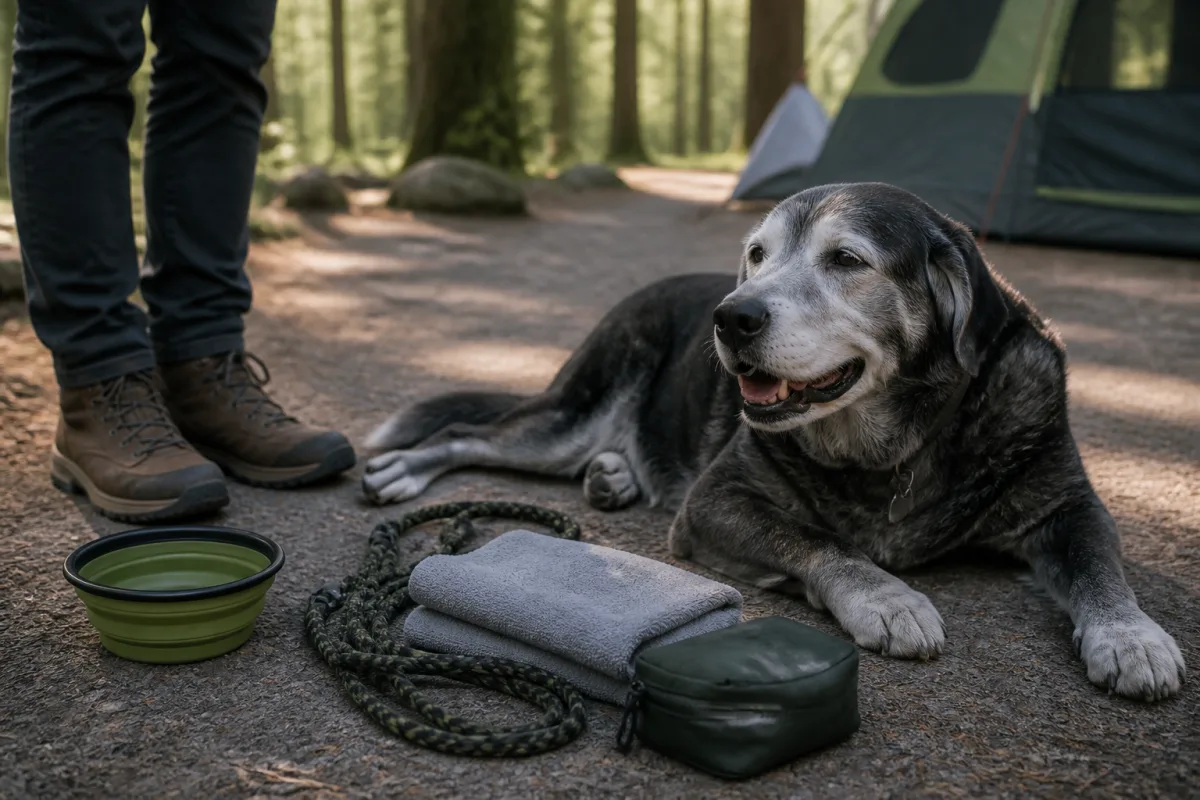
Plan one modest outing, one longer recovery window, and one low-key enrichment activity rather than filling every hour. Sniffing near camp, a short paved walk, or a food puzzle can provide interest without requiring a difficult trail. A dog stroller may also support participation when a dog can enjoy the destination but should not walk every section; read a dog stroller for large dogs as part of a broader outing plan, not as permission to ignore signs of discomfort.
Keep the first trip shorter than your maximum available time. A successful overnight gives you a baseline for the next trip: how much water was used, which surface worked, how long settling took, and what needed to be closer to the bed. Record those observations while they are fresh.
Make a backup plan for your senior dog camping checklist
Save the destination’s rules, the nearest veterinary clinic, a weather alert page, and a route home that does not depend on a single trail. Tell a trusted person where you are going. If the campsite becomes too hot, wet, crowded, smoky, or physically demanding, the backup plan may simply be an earlier departure. That is a successful decision, not a failed adventure.
Also plan for the human parts of care. Who carries water? Who checks the leash? Who watches the dog while the other person cooks or packs? Clear roles reduce the chance that an older dog waits too long for a break while everyone assumes someone else is watching.
Use the senior dog camping checklist as a record of what made this trip comfortable, so the next plan starts with evidence instead of a guess.
Senior dog camping checklist: departure and return
Before leaving home, do a final three-minute check: identification is secure, water is accessible, the dog can enter and exit the vehicle safely, the leash is attached before the door opens, and the backup plan is saved offline. At the campsite, repeat the check after unloading and before dusk. On the return trip, inspect paws and coat, offer the usual water and food routine, and give the dog a quiet recovery period.
A calm return matters. If stiffness, limping, unusual fatigue, appetite changes, or behavior changes persist after rest, contact your veterinarian. The senior dog camping checklist should end with observation, not with a demand to repeat the same distance next time.
When camping is the wrong choice
Some dogs are safer and happier staying home with a trusted caregiver. That may be true when the destination has no legal pet access, the route requires more exertion than the dog can comfortably manage, the forecast is unsafe, or the dog is distressed by unfamiliar noise and wildlife. Choosing a familiar environment protects the relationship that made the trip appealing in the first place.
Official planning resources
Start with the National Park Service camping-with-pets guidance, which covers pet access, identification, supplies, leash control, and supervision. Review the NPS B.A.R.K. principles for waste, leash use, wildlife respect, and knowing where pets can go. The NPS during-your-stay guidance also addresses weather, ticks, vehicles, and wildlife around camp.
Frequently asked questions
What is the most important part of a senior dog camping checklist?
Confirm that the campsite, route, weather, and dog’s current comfort all fit before booking. Then plan water, rest, restraint, identification, and an easy exit.
Should a senior dog hike on every camping trip?
No. A dog may enjoy the campsite, sniffing, and family time without walking a demanding trail. Check the local rules and let present comfort guide the activity.
How much extra food and water should I bring?
Bring the usual food plus enough for a delay, and carry more water than the route estimate requires. Follow local guidance about potable water and wildlife-safe storage.
When should I cancel a camping trip with an older dog?
Cancel or shorten it when the dog is unwell, the weather is unsafe, the site is not legally accessible, or the route cannot provide a calm return. Ask your veterinarian about health-specific concerns.