

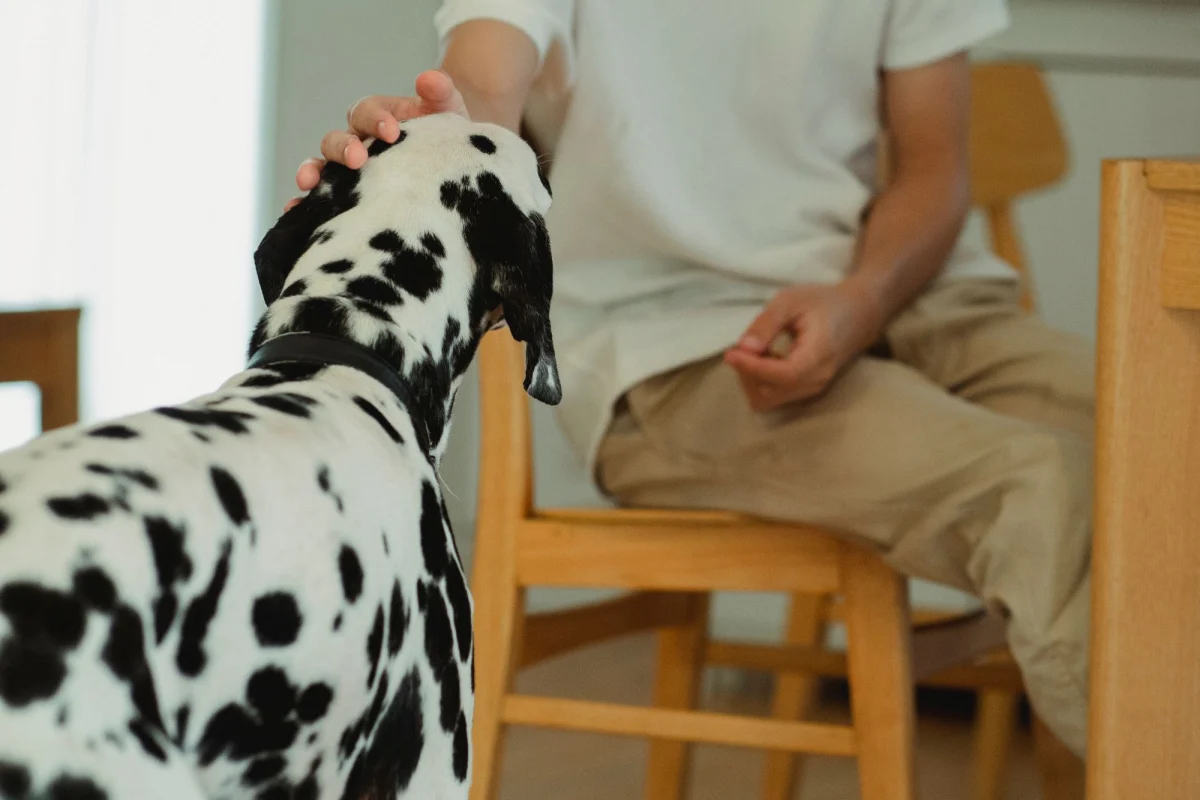
A dog home safety audit follows the dog through the real household routine and asks a practical question in every room: what can this dog reach, pull down, chew, swallow, spill, knock over, become trapped behind, or escape through? It includes obvious products and ordinary objects whose risk changes when food, medicine, trash, cords, bags, doors, and family habits meet a curious or determined dog.
Safety is not a promise that nothing will happen. It is a repeatable way to remove avoidable hazards, make responsibilities visible, and preserve a fast route to professional help. Puppies require close management, but an adult or senior dog can also investigate new food, flavored medication, holiday items, moving boxes, visitors’ bags, or a rearranged room.
A dog home safety audit starts at dog level
Walk each room twice: once standing normally and once looking from the dog’s head height without placing yourself at risk. A large dog may reach a counter or table that seems high. A puppy may fit behind an appliance or under furniture. A dog can use a chair, open cabinet, hanging towel, or wastebasket as the next step toward something inaccessible yesterday.
Record the room, item, access path, current control, owner, and completion date. “Kitchen chocolate” is not enough. Write “baking chocolate in lower pantry pullout; move to latched upper cabinet; assigned to Sam; complete today.” Photograph the corrected storage for family reference, not the hazardous setup for social media.
Use the Pet Safety Field Notes archive for focused plans on poison prevention, holidays, barbecues, pools, ice melt, cold weather, fireworks, cords, and lost-dog response. Each guide supports the same room-by-room audit.
Audit food, trash, counters, and bags
The FDA lists xylitol, chocolate, caffeine, grapes and raisins, onions, human medications, and other common household items among hazards for dogs. Xylitol may appear in sugar-free gum and candy, toothpaste, some medicines or supplements, and other products. Read ingredient labels and store the product, wrapper, bag, and used packaging beyond the dog’s access.
Check countertops, islands, dining tables, bedside tables, coffee tables, backpacks, handbags, lunch boxes, grocery bags, delivery boxes, and coat pockets. A closed room helps only when everyone closes it. Use storage that remains secure when a large dog nudges, paws, or pulls at the surface.
Trash needs a stable, secured container or an inaccessible cabinet. Corn cobs, bones, food wrappers, strings, skewers, and bags can create obstruction, puncture, or suffocation risks. Move trash before guests arrive and after cooking, not after the dog begins investigating.
Build a dog home safety audit for medications
Store human medicine, dog medicine, supplements, and flavored veterinary chewables in original labeled packaging inside secure storage. FDA guidance warns that flavored products can be attractive to dogs. A child-resistant closure is not necessarily dog-resistant, and a weekly pill organizer can become a spill of unidentified tablets.
Check bedside tables, handbags, bathroom counters, kitchen organizers, delivery packages, and the place where medicine is prepared. Separate each dog’s prescription and current dosing tool. Retire discontinued or expired products according to professional and local disposal instructions rather than leaving them available for a future guess.
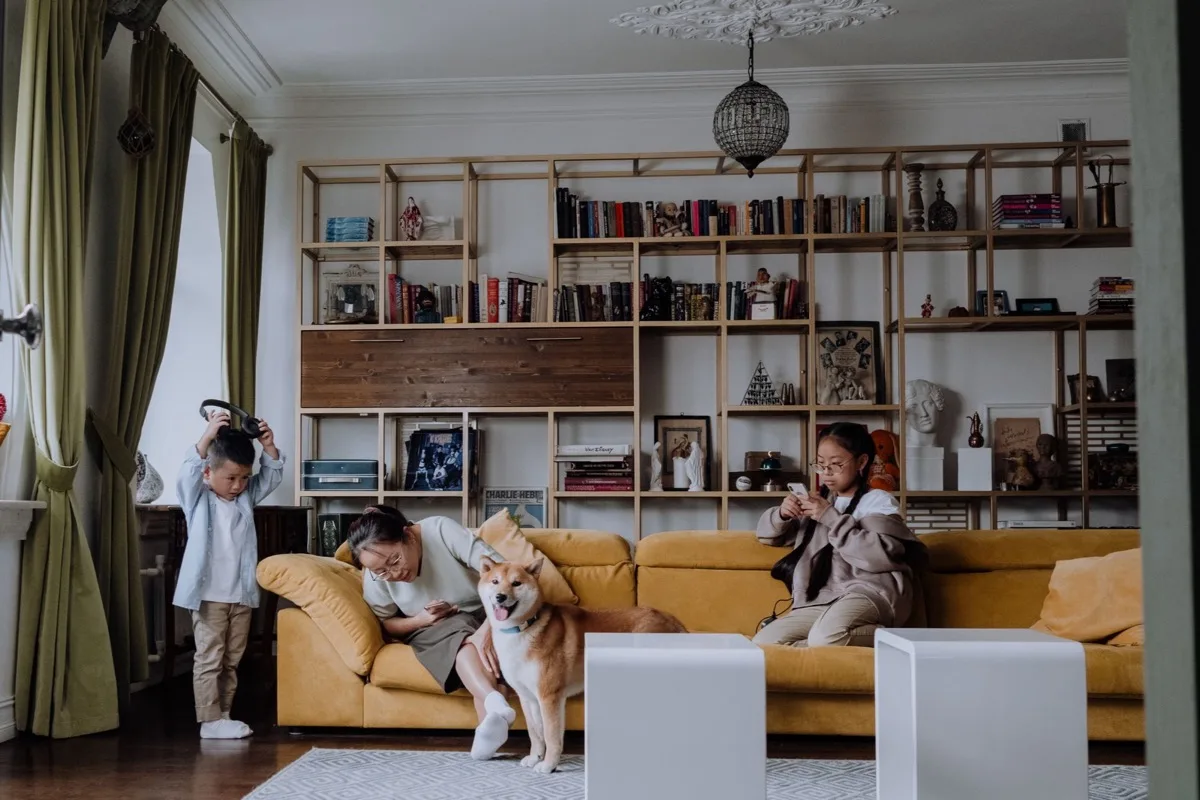
Place the veterinarian, emergency hospital, and poison-control contact path beside the current medication list. In a possible ingestion, keep the package available, note the time and estimated amount only if known, and call immediately. Do not delay contact while trying to make the estimate perfect.
Check cleaners, pesticides, garage products, and laundry
Keep cleaners, detergents, disinfectants, pesticides, fertilizers, automotive fluids, fuel, paint, solvents, batteries, and tools in their labeled containers and in storage the dog cannot enter. Follow the product label for use, ventilation, drying, rinsing, re-entry, and disposal. Never assume a product is safe because it is marketed as natural.
EPA pesticide guidance says to remove dogs, toys, bowls, and food before application and keep them away until the label’s re-entry conditions are met. Review lawn services, pest-control visits, and household applications as scheduled events in the family calendar.
Laundry rooms combine pods, sheets, fragrance products, medications in pockets, strings, small clothing, heat, and machinery. Keep doors and appliance lids closed, inspect loads before starting, and store used dryer sheets and product packaging out of reach.
Inspect cords, batteries, toys, and swallowable objects
Trace every electrical cord from outlet to device. Remove dangling loops, block access, replace damaged insulation, and unplug portable devices when appropriate. Keep chargers, earbuds, remote controls, button or coin batteries, tools, sewing supplies, hair ties, children’s toys, and small decorations in secure storage.
Inspect dog toys by size and condition. A product that was appropriate when intact may become a swallowing or choking hazard when cracked, frayed, split, or reduced to a small piece. Supervise use according to the dog and product instructions, and remove damaged items rather than waiting for the next play session.
Do not use a household audit to choose a treatment after ingestion. An apparently small object can still be dangerous depending on material, shape, location, and the dog. Call a veterinary professional.
Use a dog home safety audit on doors, gates, and windows
Test exterior doors, yard gates, balcony access, screens, fences, latches, and garage doors from the dog’s actual side. Check gaps, digging zones, loose boards, sharp edges, climbable objects, and the sequence used by children or visitors. A gate is only effective when it is correctly installed, closed, and appropriate for the space.
Create a two-barrier routine during deliveries and gatherings: for example, dog behind a closed interior door before the exterior door opens. Avoid placing the dog where fear, heat, crowding, or escape attempts increase. Behavior distress requires qualified help, not progressively stronger confinement without assessment.
Confirm microchip registration and current identification details, while remembering that a microchip is not GPS and does not replace a visible identification tag. Store a current photo and the lost-dog response plan where family can reach it quickly.
Review shared spaces and respectful interaction
A household safety plan includes how people approach the dog. The CDC advises supervision around children and avoiding disturbance while a dog eats or sleeps. Give the dog an accessible rest area, teach children to leave a moving-away dog alone, and use adult management instead of expecting a dog to tolerate every interaction.
Guests may bring medication, gum, food, cannabis products, nicotine, bags, or mobility aids that alter the room. Explain storage and door rules before arrival. Put a labeled guest shelf or secure cabinet above dog reach so compliance is easy.
Add a short arrival check to the dog home safety audit: secure exterior access, collect bags, identify any food or medicine, explain child-and-dog supervision, and show guests where doors must remain closed. During a gathering, assign one adult to know where the dog is rather than assuming everyone is watching. Give the dog a quiet, accessible retreat and stop interactions when the dog moves away, becomes tense, or cannot settle.
For a senior or mobility-limited dog, include secure footing, consistent furniture positions, lighting, and an unobstructed route. New slips, falls, confusion, or avoidance should prompt veterinary discussion.
Connect the audit to emergency readiness
The CDC and Ready.gov recommend including dogs in household disaster plans with identification, leashes or carriers, records, medicines, food, water, and an evacuation destination that accepts animals. The related dog emergency evacuation plan turns those materials into a route and responsibility system.
Keep supplies accessible but secured from the dog. Rotate food and medication before expiration, update records, and practice calm loading only as appropriate. Put an out-of-area contact and two destination options in the plan. During an event, follow public-safety and veterinary instructions.
Repeat the dog home safety audit after change
Repeat the dog home safety audit monthly in high-risk areas and after holidays, visitors, home repairs, pest treatment, new medication, a delivery, moving furniture, adding a dog, or a change in the dog’s reach or behavior. A previously safe shelf may no longer be safe for a taller puppy or a newly determined adult.
Close each audit with three outcomes: hazards removed now, repairs assigned with dates, and professional questions placed with the correct veterinarian, poison service, product manufacturer, electrician, contractor, or behavior professional. Do not leave vague notes as a substitute for action.
Use the Field Notes library to keep every seasonal or room-specific checklist tied to the same home baseline. This makes recurring risks easier to spot and gives family members clear context for the next action.
Complete the audit at dog level, remove access to hazards, assign owners and deadlines, and recheck controls; products cannot guarantee safety.
Confirm that the household fixes and emergency contacts are complete. You can then take a closer look at Steadavo gear; use the home and outing controls already in place to frame the review.
Sources and professional context
- FDA: Paws Off! Xylitol Is Toxic to Dogs
- FDA: Potentially Dangerous Items for Your Pet
- FDA: Properly Store Medications to Keep Your Pet Safe
- CDC: Pet Safety in Emergencies
Related guides for dog home safety audit
Choose the focused dog guide that matches your next step:
- A Dog Household Poison Prevention Checklist
- A Dog Holiday Decoration Safety Plan
- A Dog Barbecue Safety Checklist for Family Gatherings
- A Dog Pool Safety Plan for Home and Vacation
- Dog Ice Melt Safety for Winter Walks
- A Dog Cold Weather Walk Safety Checklist
- A Dog Fireworks Safety Plan Before the Noise Starts
- A Puppy Electrical Cord Safety Checklist
- A Lost Dog Response Plan for the First Critical Hours
More focused Pet Safety guides
More dog-only guides for the next practical decision:
- A Dog Battery Storage Safety Checklist
- A Dog Garage Chemical Safety Plan
- Dog Lawn Fertilizer Safety Before Yard Access
- A Dog Yard Mushroom Safety Response Plan
- A Parked Car Heat Prevention Plan for Dogs
- A Dog Balcony and Window Safety Checklist
- How to Keep Festive Foods Away From Dogs
- A Dog Smoke Alarm Evacuation Drill
- A Dog Workshop Tool Safety Checklist
- A Dog Compost Bin Safety Plan
Frequently asked questions
How often should a dog home safety audit be repeated?
Review high-risk areas monthly and repeat after visitors, holidays, repairs, pest treatment, new medication, deliveries, furniture changes, adding a dog, or any change in reach or behavior.
What should I do if my dog may have eaten something toxic?
Contact your veterinarian, an emergency veterinary hospital, or an animal poison control service immediately, keep the package available, and follow professional instructions. Do not induce vomiting or give a home remedy unless directed.
Is puppy-proofing enough for an adult dog?
No. Adult and senior dogs can encounter new medications, foods, visitors’ bags, holiday items, changed rooms, and changing ability. Safety controls must follow the current dog and household.