

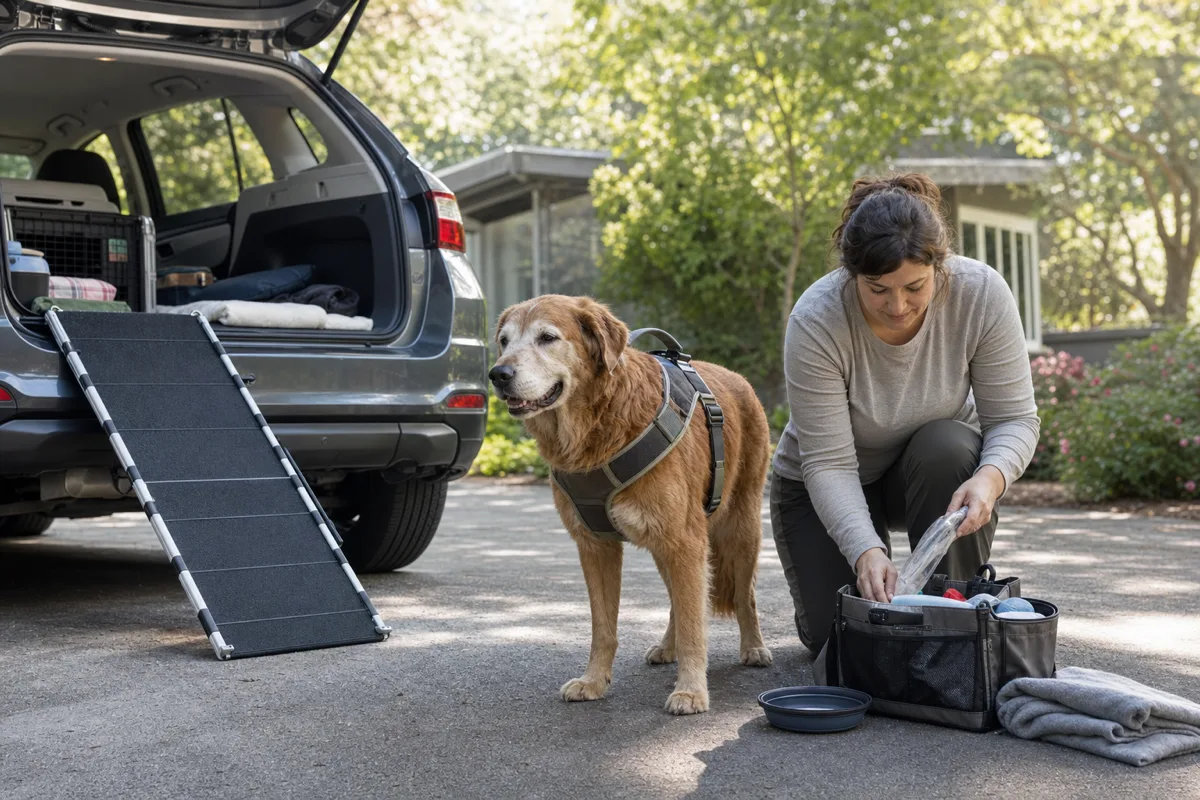
A dog emergency evacuation plan should be built before smoke, floodwater, severe weather, or a utility failure turns an ordinary departure into a rushed one. For a large or senior dog, the plan needs more than a leash and a bag of food. It needs realistic transport, enough space, current records, a backup caregiver, and a routine the dog and handler have already practiced. The goal is not to predict every emergency. It is to remove avoidable decisions from the first hour.
Why large and senior dogs change evacuation timing
Size, stamina, hearing, vision, confidence, and current mobility can all affect how quickly a dog can leave a building and settle into a vehicle. A dog who moves comfortably on a familiar morning may hesitate when alarms sound, the floor is wet, the lights are out, or strangers are nearby. A handler may also need more room to turn, lift a ramp, secure equipment, or help a dog through a doorway.
That makes time the most useful margin. Follow official evacuation instructions, and do not wait for conditions to become dramatic before acting. If local authorities advise an early departure, a household with a large or senior dog may need every minute of that lead time. Write that reality into the family plan instead of assuming the dog can be added at the end.
Choose Destinations for a Pet Evacuation Plan
A packed kit does not answer the first practical question: where can the whole household go? Identify at least two realistic destinations in different directions. One may be a friend or relative outside the immediate area. Another may be a pet-friendly hotel, boarding facility, or community shelter whose current policy you have verified directly.
Record the destination name, phone number, address, check-in rules, and a second route. Pet policies and emergency arrangements can change, so treat this as a living contact list rather than a promise. Add the local emergency management agency, veterinary clinic, and a trusted person who can reach the dog if the primary caregiver is away.
For each destination, ask a few concrete questions:
- Are large dogs accepted, and are there weight, number, or enclosure limits?
- Is there a ground-floor or step-free route?
- Where can the dog take a quiet break away from crowds?
- What identification or vaccination records are required?
- What is the backup if that destination is inside the affected area?
Keep the answers on paper as well as on a phone. A power outage, damaged device, or overloaded mobile network should not erase the plan. A written dog emergency evacuation plan turns those verified choices into a route that a backup caregiver can follow without making new decisions under pressure.
Practice the Dog Emergency Evacuation Plan
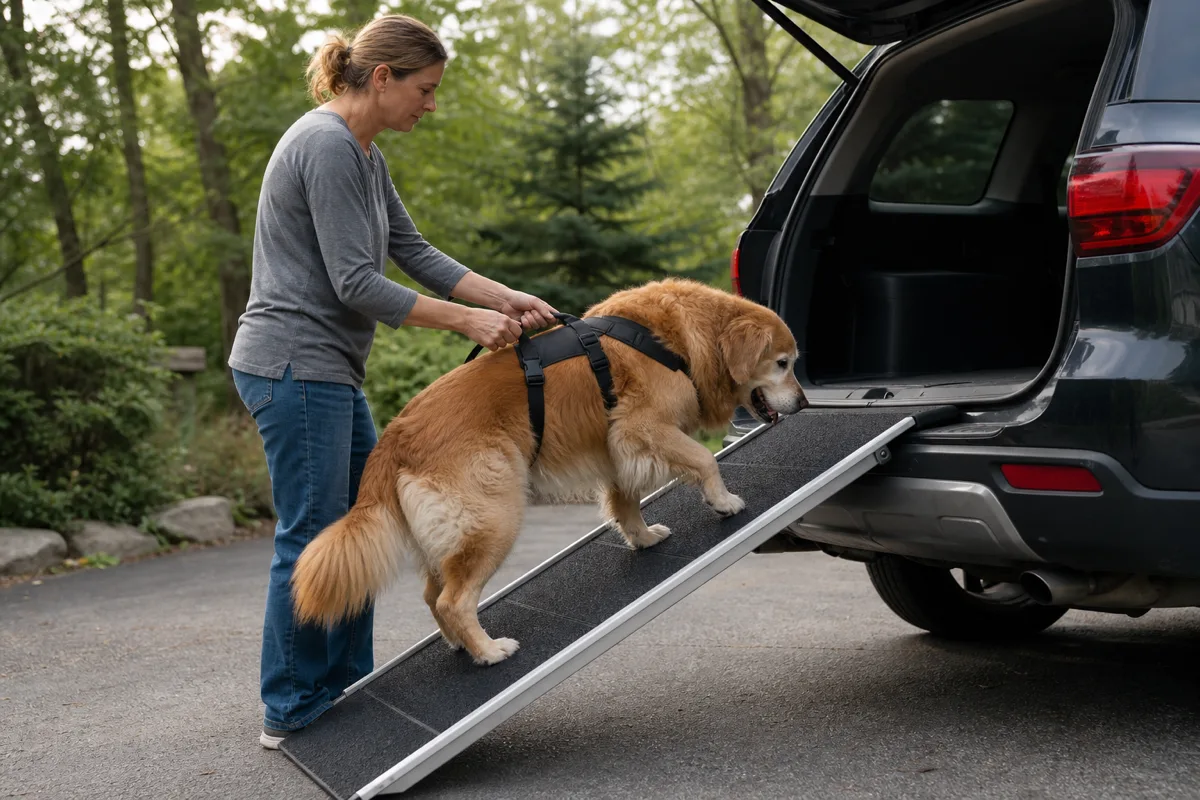
Emergency transport should use equipment the dog already knows whenever possible. Practice the full sequence on an uneventful day: call the dog, attach the normal walking gear, move through the chosen exit, enter the vehicle, settle, and secure the door. In a dog emergency evacuation plan, a ramp, mobility harness, carrier, or wheeled support should be handled calmly enough that neither the dog nor caregiver is meeting it for the first time during a warning.
Current measurements matter because a resting position, doorway, carrier, or mobility system that worked months ago may no longer fit the same way. The Steadavo Fit Guide can help organize present measurements and handler questions, but it is not an emergency-services assessment. Speak with your veterinarian about health changes, prescribed care, or the safest way to assist an individual dog.
Vehicle space also needs a real rehearsal. Load the dog, mobility equipment, emergency kit, and the people who would actually travel together. Confirm that the driver can see, doors close normally, exits remain usable, and loose objects cannot shift into the dog’s space. The SUV trunk fit guide offers a practical method for measuring the cargo opening and usable floor before a stressful trip.
Pack an Emergency Plan for Dogs by Job
A useful kit solves specific problems: identification, daily care, movement, cleanup, communication, and calm. Pack it in containers one person can carry while also handling the dog. Label the outside with the dog’s name and the primary and backup contact numbers.
Identity and records
- A recent clear photograph of the dog from the front and side.
- Microchip number, license information, and current contact details.
- Vaccination and medical records supplied by the veterinary clinic.
- A written list of prescribed products, schedules, and clinic contacts.
- A temporary identification tag with an out-of-area contact.
Store copies in a waterproof sleeve and in an encrypted digital location that a trusted caregiver can reach. Do not rely on a social media post as the household’s only identification record.
Food, water, and daily care
Pack the dog’s normal food in sealed portions, water, bowls, cleanup bags, and any routine care items the dog needs. Rotate dated supplies so the kit does not quietly expire. Sudden food changes can add another problem during an already unfamiliar day, so the kit should reflect the dog’s ordinary routine rather than an aspirational travel setup.
Prescribed products should stay in their original labeled containers. Keep written instructions with them and check dates regularly. This article cannot determine an individual dog’s medical needs; confirm emergency quantities, storage, and substitutions with the prescribing veterinarian.
Movement and containment
Include the dog’s familiar leash, harness, secure enclosure if used, and a backup connection point. A large dog may require two people for a narrow staircase or vehicle entry, so the plan should name those people and describe who controls doors, who handles equipment, and who carries the kit. Avoid improvising with equipment that has never been fitted or practiced.
Calm and cleanup
A washable mat, familiar blanket, towel, grooming wipes, waste supplies, and one quiet enrichment item can make an unfamiliar room easier to manage. Comfort items should be small enough to pack without displacing water, records, or essential care supplies. The aim is a recognizable resting place, not a second household.
Write a One-Page Pet Evacuation Plan Handoff
An evacuation plan should still work if the primary caregiver is delayed or separated from the dog. Create a one-page handoff that a trusted person can follow without searching through messages. Include the dog’s normal name and cues, safe handling points, feeding routine, current limitations, equipment instructions, veterinary contact, and both destinations.
Also state what not to do. A nervous dog may bolt through an open gate, resist being lifted, guard a painful area, or refuse an unfamiliar ramp. Calm, specific notes are more useful than broad labels such as “friendly” or “difficult.” Give the backup caregiver a house key or approved access method and review the plan together.
Plan for shelter and hotel realities
Emergency shelters often operate under changing local conditions. Some accommodate pets in a separate area; others direct families to a partner site. Hotels may change availability quickly. Verify rather than assume, and keep more than one option.
When calling, describe the dog accurately. Ask about stairs, elevators, relief areas, noise, parking distance, and the space available for a large dog’s resting setup. If the dog cannot be left unattended, build meals and errands around that rule. If the household has mobility equipment, confirm where it can be stored without blocking a shared exit.
Neighbors can be part of the plan without becoming the entire plan. Exchange contact information, identify who may be home during work hours, and agree on a simple signal for help. Each household should still maintain its own transport and destination plan.
Rehearse the Dog Evacuation Checklist Twice a Year
A rehearsal should be calm enough to teach the routine, not frighten the dog. Choose a normal day, tell everyone it is a practice, and time only the practical steps. Use each dog emergency evacuation plan rehearsal to identify friction points rather than turning the exercise into a competition.
- Send the household alert and confirm who responds.
- Collect the dog using the planned route and equipment.
- Load people, dog, kit, and mobility support into the vehicle.
- Drive a short distance and stop somewhere quiet.
- Set up water and the resting area, then return home.
- Replace anything that was awkward, heavy, missing, or expired.
Repeat after a move, vehicle change, major health change, or change in caregiver availability. A five-minute correction made now can prevent a long delay later.
Use a Dog Evacuation Checklist at Departure
When an official warning arrives, use the written plan. Check the destination and route, contact the backup person, secure the dog before exterior doors stay open, and load essential equipment before small convenience items. Keep the dog leashed or contained at stops, even if the dog is usually reliable. Stress, noise, wildlife, traffic, and unfamiliar people can change behavior.
Do not place the dog in an unsafe vehicle position or leave the dog in dangerous temperatures while finishing household tasks. If conditions are deteriorating, personal safety and official instructions take priority over property. Emergency responders and local authorities, not this article, determine evacuation zones and timing.
Reset the routine after arrival
At the destination, create a controlled resting area before opening multiple bags or doors. Offer the familiar routine gradually, confirm water access, and check identification and equipment for damage. Record unusual behavior or physical changes so they can be described accurately if professional help is needed.
After the emergency, restock the kit and revise the plan while the weak points are still clear. A dog emergency evacuation plan becomes dependable through small updates: a new phone number, a better loading order, a lighter container, or a destination that has confirmed its current policy.
Official planning resources
- CDC pet emergency preparedness guidance
- CDC pet disaster kit checklist
- Ready.gov pet disaster planning guide
- FEMA Animals in Disasters awareness course
Frequently asked questions
What should go in an emergency kit for a large or senior dog?
Prioritize current identification and records, normal food and water, prescribed care in labeled containers, familiar handling equipment, cleanup supplies, and a compact resting layer. Adjust the kit with guidance from the dog’s veterinarian and local emergency authorities.
How often should a dog evacuation plan be practiced?
A calm rehearsal twice a year is a useful baseline, with another practice after a move, vehicle change, major health change, or change in caregiver availability.
Can a pet-friendly hotel replace an evacuation plan?
No. Availability and policies can change during an emergency. Keep at least two verified destinations in different directions and confirm current requirements before departure.
Should mobility equipment be introduced during an emergency?
Whenever possible, use equipment the dog already knows and that has been fitted and practiced. An emergency is a poor time to discover that an unfamiliar ramp, carrier, harness, or wheeled support does not work for the dog or vehicle.