

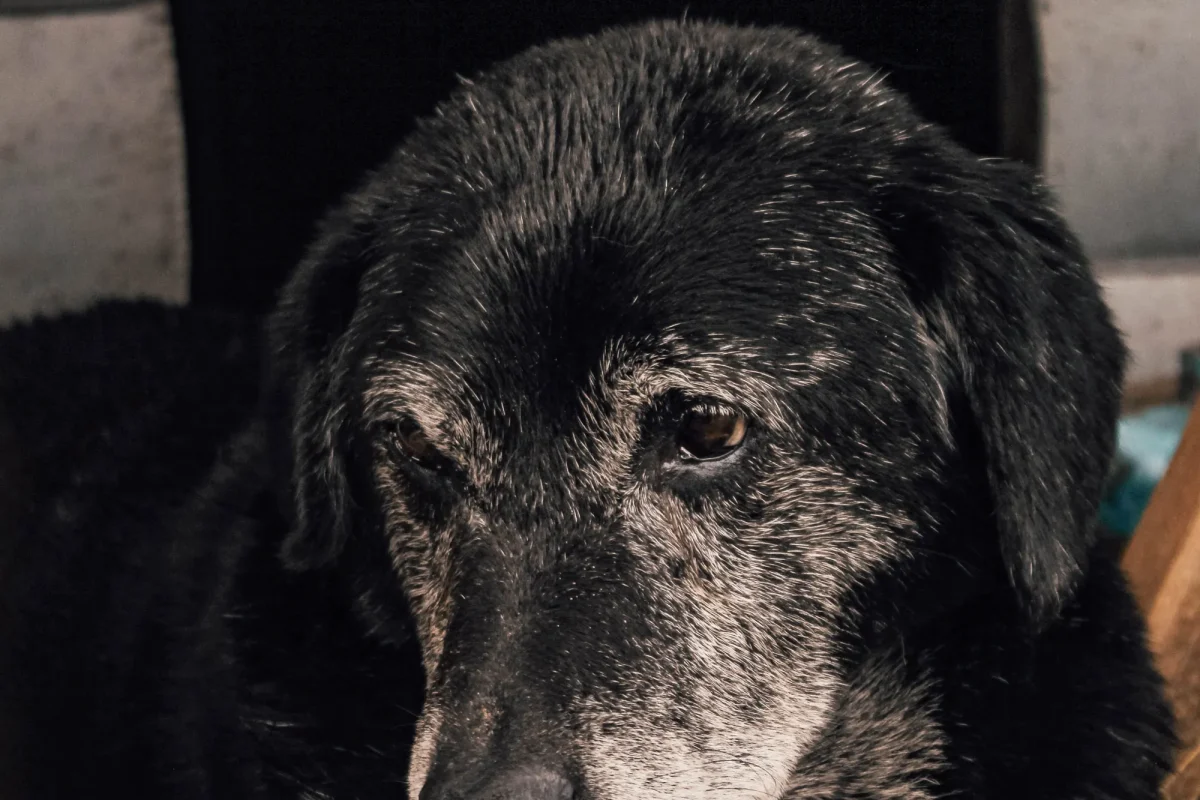
A senior dog home support plan is a living map of how an older dog reaches rest, water, food, toileting areas, family spaces, and the outside world. It does not begin with a shopping list. It begins by watching ordinary movement: rising after sleep, turning on the floor, approaching a doorway, using stairs, eating, drinking, toileting, settling at night, and entering a vehicle.
AAHA senior care guidance emphasizes that aging itself is not a disease and that care should reflect the individual dog’s size, breed, health, behavior, nutrition, pain, cognition, and environment. A plan therefore records what the dog can do comfortably now, removes avoidable barriers, and gives the veterinary team specific changes to assess. It never treats a ramp, rug, bed, or harness as a cure.
A senior dog home support plan starts with a route map
Draw the rooms and outdoor access your dog uses in one normal day. Mark the bed, water, food, primary door, toileting area, family resting area, stairs, narrow turns, thresholds, and vehicle path. Then walk the route at the dog’s pace. Look for polished flooring, loose rugs, abrupt steps, clutter, low light, doors that close unexpectedly, and places where a large body has little room to turn.
Watch without repeatedly testing a difficult movement. Record where the dog shortens stride, pauses, braces, slips, widens stance, avoids a direction, seeks a wall, or waits for help. Note time of day and whether the behavior changes after sleep or activity. These are observations for professional context, not proof of arthritis, weakness, or cognitive disease.
The Steadavo Fit Guide can hold current measurements and access questions before you compare mobility products. Measure the dog and the real doorway, landing, vehicle, and turning space. A generic “large” label cannot tell you whether an aid fits either body or home.
Build a senior dog home support plan baseline
Choose five repeatable daily moments: first rise, first walk to water, meal, outdoor access, and bedtime settling. For one calm week, describe how the dog completes each moment. Use the same language and viewing position. A baseline might say, “rose from the living-room bed without help, paused before the tile, crossed on the runner, and settled after the outdoor trip within five minutes.”
Add one weekly functional observation your veterinarian approves, such as the time and quality of a familiar short route. Cornell’s work on aging dogs describes repeatable functional measures as useful context, but home notes cannot diagnose or grade disease. Do not force repetitions, race the dog, or compare one dog with another.
Review video only when it can be recorded safely without changing the movement. A short side view on the usual surface can be more useful than a dramatic clip captured after fatigue. Label the date, surface, time, and activity. Stop recording when the dog needs assistance.
Create continuous traction on essential paths
In a senior dog home support plan, traction works best as a connected path. A small mat beside the bed does little if the dog must cross several feet of slick floor to reach water. Use stable, low-profile surfaces that lie flat, resist bunching, and can be cleaned. Secure edges so they do not become a new trip point. Recheck grip after washing and replace a runner when backing or corners lift.
Prioritize the bed-to-water route, bed-to-door route, feeding position, turn near the exterior door, and any transfer area. For a large dog, allow enough width for natural foot placement and a gentle turn. Avoid forcing a dog to pivot tightly between furniture and a wall.
AAHA pain-management guidance includes stable footing and environmental modification as possible parts of a broader veterinary plan. It does not mean flooring changes replace examination, weight management, rehabilitation, medication, or other treatment recommended for the individual dog.
Make rest, water, food, and toileting easy to reach
A senior dog home support plan should place a supportive rest area on the main living level and close to family activity without blocking a walkway. The dog should be able to step onto the bed, turn, lie down, and rise on stable footing. Keep bedding dry, washable, and free from deep edges that catch feet. A second quiet bed can reduce unnecessary travel between rooms.
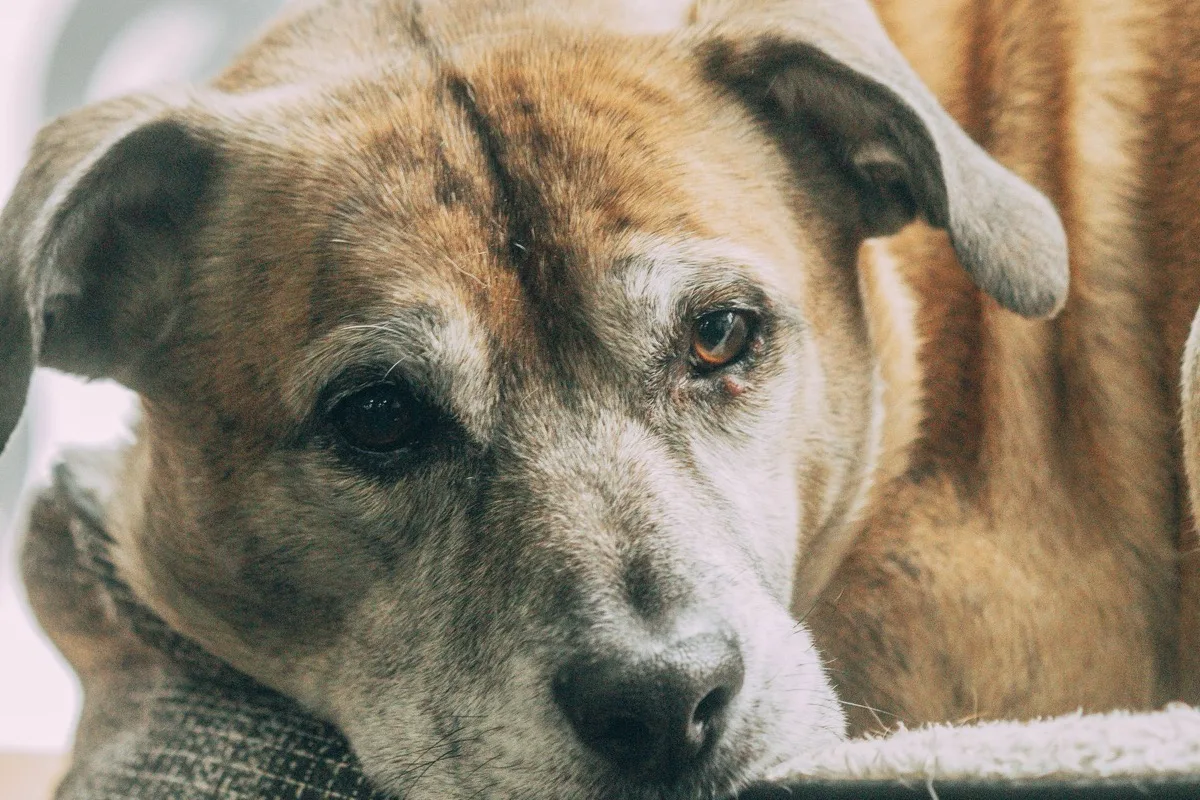
Place water where the dog can approach without sliding or squeezing between objects. Use a stable bowl position that does not move across the floor. Do not raise bowls or change feeding posture on a generic recommendation; ask the veterinary team about individual needs, especially for a large or deep-chested dog.
Make outdoor access predictable. Keep the leash and needed support device in one place, provide enough light, clear the threshold, and maintain a safe toileting surface. A flexible schedule may reduce rushed movement, but increased urgency, accidents, straining, or elimination change deserves veterinary discussion.
Evaluate steps, ramps, gates, and furniture access
Within a senior dog home support plan, list every vertical change the dog uses: porch step, interior stair, vehicle sill, sofa, bed, and curb. Decide whether it is essential. The safest modification may be moving the dog’s daily life to one level, blocking an unsafe stair, or rearranging furniture rather than adding equipment to every height.
Ramps and pet stairs are not interchangeable. Slope, width, side guidance, surface grip, landing space, structural stability, and the dog’s movement pattern matter. Introduce any device flat or at the lowest practical angle with voluntary, rewarded steps. Never pull a reluctant or unstable dog up an aid. Consult a veterinarian or rehabilitation professional about which movement is appropriate.
The related large-dog stroller guide explains how supported outings may preserve shared time when walking distance changes. A stroller is an access tool, not a home-treatment plan, and it still requires safe loading, restraint, fit, and a dog who can use it comfortably.
Use a senior dog home support plan for nighttime
Night changes the same route. Add low, even lighting from bed to water and the toileting door without creating glare or sharp shadows. Keep furniture and gates in consistent positions. Use a quiet cue before approaching a sleeping dog whose hearing or vision may have changed, and ensure family members know the night route.
Record pacing, staring, vocalizing, altered sleep, house-training change, getting stuck, or difficulty finding familiar locations. Cornell describes these patterns among observations that may appear with canine cognitive dysfunction, but similar behavior can have other causes. A veterinarian must evaluate the dog and exclude other medical explanations.
Do not respond to a night change only by adding barriers. First check whether the dog can reach water and toileting safely, whether pain or discomfort may be present, and whether the family routine changed. Keep a dated log and bring it to the appointment.
Coordinate lifting and assistance before it is urgent
A senior dog home support plan should identify who can help, what device is already introduced, and which movements should not be attempted. Lifting a large dog without a plan can injure both dog and person. An improvised towel sling may press on painful areas or provide poor control. Ask a veterinary or rehabilitation professional to demonstrate an appropriate technique for the individual dog.
Keep an approved lift-assist harness or sling accessible only after fit and use have been taught. Inspect straps, stitching, closures, and contact areas before every use. Support the dog without suspending or dragging, and stop when the dog struggles, shows pain, or cannot bear weight as expected.
Write an emergency transfer plan with the regular clinic, emergency hospital, vehicle, helpers, and entry route. In an emergency, call ahead and follow professional instructions rather than completing the home checklist.
Review the senior dog home support plan every month
A monthly senior dog home support plan review compares the current week with the baseline. Walk each essential route, test mat edges, check lighting, clean and inspect beds, confirm water access, and review notes for recurring pauses, slips, night changes, or assistance. Update the plan after veterinary advice or a meaningful change.
Remove equipment that is no longer appropriate. A device can become too narrow, too steep, unstable, or difficult to use as ability changes. Avoid keeping an unsafe setup because the dog used it in the past. The right plan is allowed to become simpler.
Use the Senior Dog Care Field Notes archive for guides on stiffness observations, non-slip flooring, ramp introduction, night lighting, toileting schedules, temperature comfort, cognitive enrichment, veterinary questions, and lift-assist harnesses. Each guide supports this home-level plan and the dog’s shared baseline.
Keep the plan focused on quality of life
A home can become safer without becoming smaller. Preserve access to family, sunlight, sniffing, familiar resting places, and calm outdoor time. Cornell senior-dog enrichment guidance supports adapting activities to current physical and cognitive ability, with safe footing, rest, and frequent reassessment.
Ask what the dog chooses when options are accessible. Does the dog join the family, seek the quieter bed, enjoy a short sniff, or settle after assistance? Combine those observations with appetite, sleep, hygiene, pain assessment, mobility, and veterinary findings. Quality of life is broader than whether the dog can complete one difficult movement.
A useful plan does not promise to stop aging. It removes unnecessary effort, detects change earlier, and gives the family a consistent language for professional conversations. That is enough to make everyday life more predictable and more centered on the dog in front of you.
A home support plan should begin with the senior dog’s observed routine, measured spaces, household changes, and veterinary guidance when needed.
For time outside the home, consider Atlas within the senior-dog outing plan as one optional mobility decision.
Sources and professional context
- AAHA 2023 Senior Care Guidelines Toolkit
- AAHA: Nonpharmacologic Pain-Management Modalities
- Cornell: Cognitive Dysfunction Syndrome
- Cornell: Senior Dog Enrichment
Related guides for senior dog home support plan
Choose the focused dog guide that matches your next step:
- A Senior Dog Morning Stiffness Observation Log
- A Non-Slip Flooring Plan for Senior Dogs
- A Senior Dog Ramp Introduction Routine
- A Night Lighting Plan for Senior Dogs at Home
- A Senior Dog Toileting Schedule That Stays Flexible
- A Senior Dog Home Temperature Comfort Plan
- Cognitive Enrichment for Senior Dogs at Home
- A Senior Dog Veterinary Visit Question List
- A Lift-Assist Harness Introduction for Senior Dogs
More focused Senior Dog Care guides
More dog-only guides for the next practical decision:
- Home Cues for a Senior Dog With Hearing Changes
- A Home Layout Review for Senior Dog Vision Changes
- How to Place Hydration Stations for a Senior Dog
- A Weekly Senior Dog Comfort Journal
- A Senior Dog Car Ride Rest Schedule
- How to Rotate Resting Surfaces for a Senior Dog
- A Senior Dog Mobility Video Journal for Vet Visits
- A Senior Dog Seasonal Routine Transition Plan
- How to Review Food Bowl Height for a Senior Dog
- A Senior Dog Caregiver Handoff Sheet
Frequently asked questions
What should a senior dog home support plan include first?
Start with the dog’s essential daily routes, current movement baseline, traction, rest, water, food, toileting access, lighting, and a clear path for veterinary questions before comparing products.
Are rugs enough to help an older dog on slippery floors?
Traction should form a stable, connected path and remain flat after use and cleaning. Rugs alone cannot address pain, weakness, neurologic change, or an unsuitable route, so discuss movement changes with a veterinarian.
How often should the home plan change?
Review it monthly and after any meaningful mobility, sleep, toileting, behavior, medical, or veterinary-plan change. Remove or replace an aid when it no longer fits the dog or the route.