

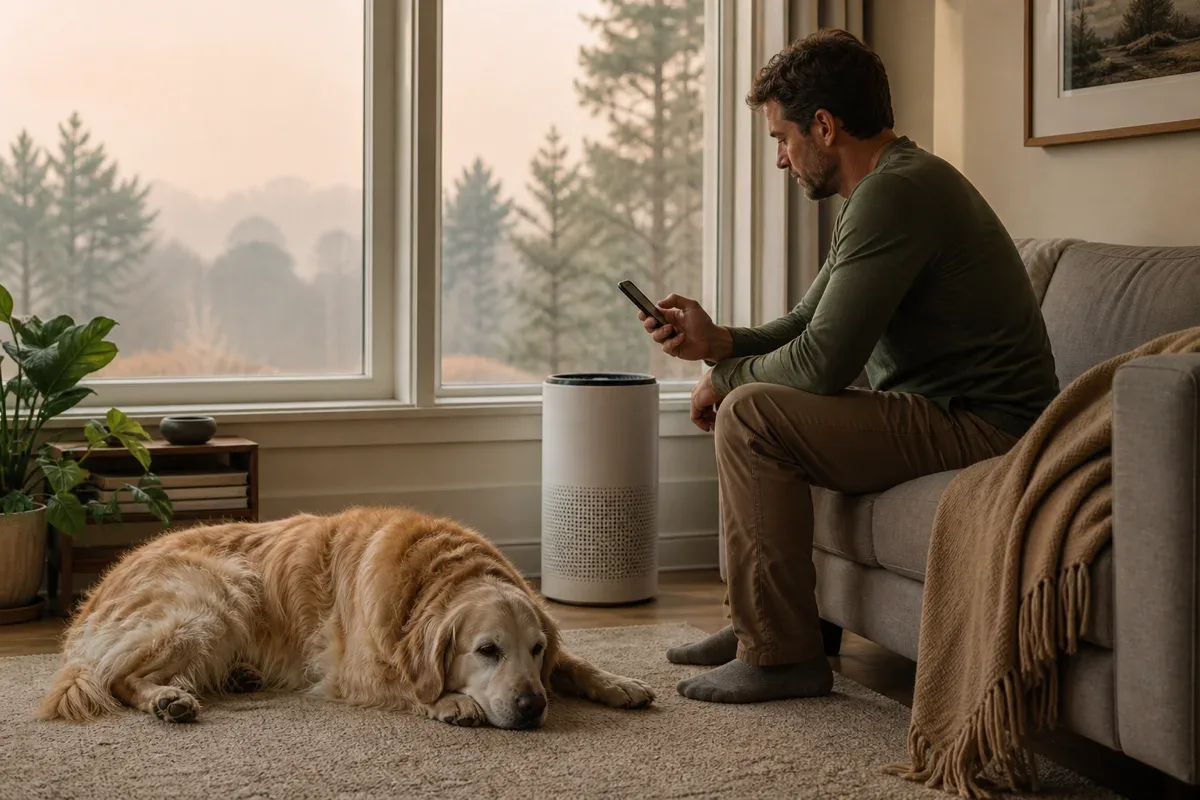
Wildfire smoke safety for dogs starts with a simple decision: when the air changes, adjust the day before a dog has to struggle through it. Smoke can irritate the eyes and respiratory tract, and some dogs may be more vulnerable because of age, anatomy, or an existing heart or lung condition. The useful response is not panic or a homemade treatment. It is a calm routine built around current air information, less exposure, a safely cooled indoor space, and a clear threshold for calling a veterinarian.
This guide is general education for families with large and senior dogs. It cannot judge an individual dog’s breathing, diagnose smoke exposure, or replace veterinary care. If your dog has a known medical condition, speak with your veterinarian about a smoke-day plan before poor air arrives.
Wildfire smoke safety for dogs starts with current conditions
Begin with an official source rather than the color of the sky alone. The U.S. Environmental Protection Agency recommends the AirNow Fire and Smoke Map for current fine-particle conditions, fire locations, smoke plumes, and available outlooks. Check it before the first bathroom trip, again before any planned outing, and whenever wind or visibility changes.
The Air Quality Index is a public-health tool for people. Its familiar categories—from Good through Hazardous—help communicate how polluted the outdoor air is, but they are not universal dog-specific cutoffs. Do not turn one AQI number into a promise that every dog is safe or unsafe. Read the official conditions together with heat, visible smoke, odor, exposure time, your dog’s age and health history, and what you observe in front of you.
A short written plan makes the information actionable. Decide who checks the map, which door gives the quickest bathroom access, where the dog will rest indoors, and which veterinary clinic you will call if symptoms appear. That turns wildfire smoke safety for dogs from a vague concern into a repeatable household routine.
Build a cleaner-air room without letting the house overheat
When smoke is present, EPA guidance favors keeping pets indoors as much as practical while maintaining a safe temperature. Close windows and doors when outdoor smoke is affecting the home. If your heating or cooling system allows it, use appropriate filtration according to the equipment manufacturer’s instructions. A correctly sized portable air cleaner can help reduce indoor particles in a chosen room, but it does not make the room guaranteed safe.
Choose a room where your large dog can stand, turn, stretch, and reach water without navigating stairs or slick flooring. Bring in a familiar bed or mat. Keep exits clear. Avoid adding indoor particles with smoking, candles, frying, or unnecessary vacuuming while the outdoor air is poor. If the home becomes too hot, the solution is not to keep every window closed at any cost; identify a safely cooled alternative location in advance.
Recheck the room throughout the day instead of assuming the first setup will remain suitable. Notice temperature, whether smoke odor is increasing, whether the filter needs attention, and whether the dog can settle comfortably. Keep the water bowl where it cannot be tipped during a stiff or hurried turn. If outdoor conditions worsen or the indoor space no longer stays cool and usable, move to the verified backup location in the household emergency plan.
Wildfire smoke safety for dogs includes indoor alternatives
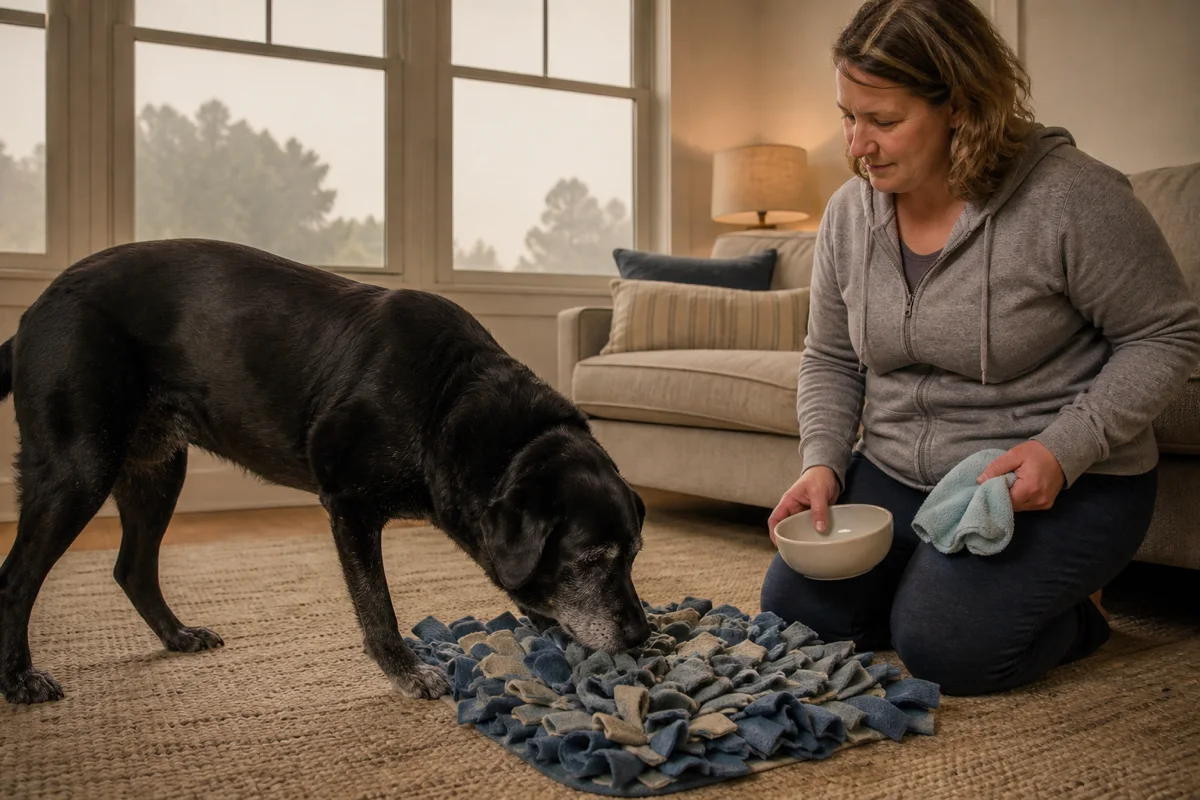
A dog who expects a morning walk still needs a comprehensible day. Cornell’s veterinary guidance suggests temporarily replacing running or hiking with appropriate indoor enrichment. For a large or senior dog, that can mean a few short scent searches, food from a familiar puzzle feeder, easy cue practice, gentle grooming the dog already enjoys, or simply moving between two comfortable rest stations.
Keep the activity appropriate for the individual dog. A puzzle should not be so difficult that it causes frantic effort, and treats should fit the dog’s normal diet. Put traction underfoot and leave room for a large body to turn. Stop if the dog becomes agitated, breathes unusually, or shows discomfort. The goal is not to recreate a full hike in the living room; it is to preserve rhythm and engagement without adding outdoor exertion.
If a shortened day is emotionally difficult for the family, revisit When the Walk Needs a Plan B. A backup routine can still include choice, companionship, and small moments of movement while wildfire smoke safety for dogs remains the priority.
Keep outside trips brief, ordinary, and easy to reverse
EPA and Cornell both recommend limiting outdoor exposure and strenuous activity when smoke is affecting air quality. For many homes, that means brief bathroom trips rather than a walk, run, or trail outing. Set up the leash before opening the door, use the closest practical relief area, and return indoors without adding an unnecessary loop.
Watch the dog, not the planned distance. A senior dog may move more slowly, need stable footing, or take longer to relieve themself. Avoid rushing, but do not turn the break into exercise. Smoke and heat can occur together, so consider surface temperature, shade, and indoor cooling as part of the same decision. A stroller or other mobility support does not filter smoky air and should never be treated as respiratory protection.
After the trip, offer fresh water and let the dog settle. Wipe obvious ash or dust from paws and coat with a damp cloth if needed, without using fragranced products or turning cleanup into a stressful grooming session. Keep the return path uncluttered so a large dog can come inside without extra handling.
Know which changes need veterinary attention
Wildfire smoke safety for dogs includes knowing when home management is no longer enough. EPA and Cornell list changes such as coughing or gagging, red or watery eyes, nasal discharge, excessive panting, unusual fatigue, reduced appetite or thirst, weakness, disorientation, or stumbling as reasons to contact a veterinarian. Open-mouth, noisy, rapid, or labored breathing is especially concerning.
Do not diagnose smoke inhalation from an article or give human medication. Do not improvise a face covering or breathing device. Call your regular veterinarian for case-specific direction, and use an emergency clinic when breathing difficulty or your local veterinary guidance indicates urgent care. If possible, note when the change began, what the air conditions were, how long the dog was outside, and whether the dog has a heart, lung, or airway history.
- Observe at rest: breathing effort is easier to judge when the dog is calm, not immediately after movement.
- Record useful context: time, exposure, appetite, water intake, coughing, eye changes, and mobility changes.
- Call rather than experiment: a veterinarian can tell you whether the dog should be seen and what to do on the way.
Give higher-risk dogs a more conservative plan
EPA and Cornell identify older dogs, very young dogs, short-nosed breeds, and dogs with heart or lung disease as groups that can warrant extra caution. Pregnancy can also change vulnerability. This does not mean every dog in one group will respond the same way. It means the household should avoid a one-size-fits-all rule and involve a veterinarian earlier.
For a senior large dog, prepare the cleaner-air room on a good day. Check that the route to it has traction and enough turning space. Keep prescribed medication available exactly as directed, maintain current emergency contacts, and know how you would move the dog without lifting beyond the handler’s ability. The Steadavo Fit Guide can help organize current measurements and handling questions, but it is not a medical assessment.
Prepare for an evacuation before the smoke thickens
Smoke may be the first sign of a wider emergency. CDC preparedness guidance recommends current identification, a registered microchip, accessible leashes or carriers, records, medications, supplies, an emergency contact, and a backup caregiver. Confirm pet-friendly lodging or shelter options because not every evacuation center accepts animals. Practice the family route rather than meeting it for the first time during an alert.
For a large dog, test the practical details: which vehicle door works, whether the dog can enter with current mobility, where the leash attaches, how supplies are secured, and who can help if the primary handler is away. Keep copies of instructions with the kit. A rehearsed plan reduces last-minute handling and supports responsible decisions without promising that any single setup will fit every emergency.
A practical wildfire smoke safety for dogs checklist
- Check AirNow and local emergency information before outdoor time.
- Use a safely cooled indoor room with appropriate filtration when available.
- Keep water accessible and reduce indoor particle-producing activities.
- Replace runs and hikes with calm, familiar indoor enrichment.
- Make bathroom trips brief and easy to reverse.
- Watch for coughing, eye irritation, unusual fatigue, weakness, or breathing changes.
- Call a veterinarian for concerning signs; do not improvise treatment.
- Keep identification, records, supplies, transport, and pet-friendly destinations ready.
The best plan is deliberately modest. Check the air, reduce exposure, keep the home safe and cool, preserve a calm routine, and ask for professional help when the dog’s condition changes. That is what practical wildfire smoke safety for dogs looks like in an ordinary household.
Sources and further reading
- U.S. EPA: Protect Your Pets from Wildfire Smoke
- AirNow: Air Quality Index Basics
- CDC: Be Prepared—Pet Safety in Emergencies
- Cornell University College of Veterinary Medicine: Dog Safety During Poor Air Quality Alerts or Wildfire Smoke
Frequently asked questions
Can I use the AQI as a safety cutoff for my dog?
Use AirNow to understand current outdoor air conditions, but do not treat one AQI number as a universal dog-specific cutoff. Consider smoke, heat, exposure time, your dog’s risk factors and behavior, and veterinary advice.
Should I walk my dog when wildfire smoke is present?
EPA and Cornell guidance favors limiting outdoor exposure and exertion when smoke affects air quality. Use brief bathroom trips and replace running or hiking with calm indoor activity until conditions improve.
Does an air purifier make a room safe for a dog?
An appropriate air cleaner can help reduce indoor particles, but it cannot guarantee safety. Keep the room at a safe temperature, follow equipment instructions, and seek veterinary advice for an individual dog’s health risks.
When should I call a veterinarian about smoke exposure?
Contact a veterinarian for concerning changes such as coughing, eye irritation, unusual fatigue, reduced appetite, weakness, or disorientation. Open-mouth, noisy, rapid, or labored breathing needs prompt professional direction.